Dutch elm disease can move fast, and trunk injections aren’t the cure-all their ads may suggest. One plant disease handbook calls trunk-injected fungicides the least effective treatment and says repeat applications may be needed. We get better results by confirming the disease first, then matching the response to the tree’s condition.
Here are the steps we use to assess an elm, slow the spread, decide if treatment is worth trying, and remove the tree when recovery isn’t realistic.
Step 1: Confirm Dutch Elm Disease and Assess the Tree
The first goal of Dutch elm disease treatment is to confirm the problem before anyone cuts or injects the tree. Wilt alone doesn’t prove Dutch elm disease. Drought, root damage, insects, and other diseases can cause similar signs.
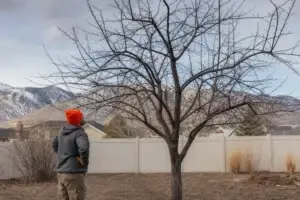
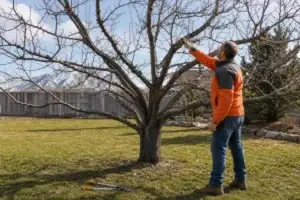
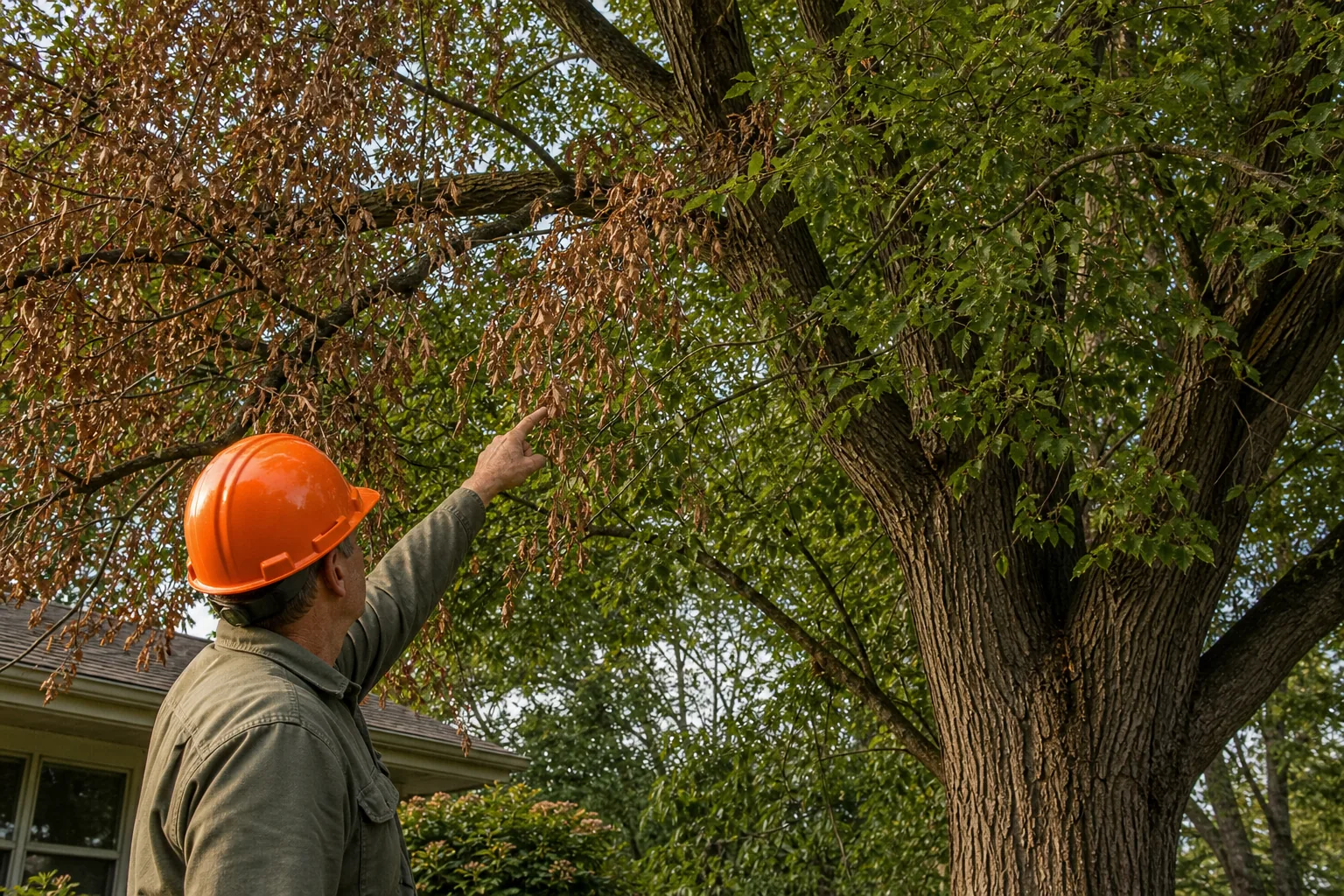
Start with the crown. Look for leaves that wilt, turn yellow or brown, and fall while nearby branches still look healthy. The change may begin on one limb. It can then move across the crown. Small twigs may die back, while the bark stays intact.
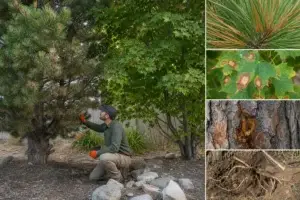
We also inspect the sapwood. A thin cross-cut through a suspect branch may show brown streaks or dark rings. Don’t make large cuts just to inspect a tree. A trained arborist can choose a small sample and send it for testing when the diagnosis is unclear.
Elm disease guidance separates sanitation work from chemical treatment. That distinction matters. A tree that has a few infected limbs may have a treatment path. A tree with broad wilt, dead upper limbs, or major trunk damage may not.
Record the pattern before work starts:
- Which limbs show wilt or dead leaves?
- How far has the dieback moved?
- Are other elms close by?
- Is there dead elm wood or bark-on firewood nearby?
- Could the tree strike a home, road, fence, or power line?
We also check the tree’s value and condition. A sound, mature elm with early symptoms may justify professional treatment. A weak tree with extensive dieback may put money into a poor outcome.
By now, you should have a working diagnosis, a map of affected limbs, and a safety plan. If the signs are hard to read, our guide to spotting dying tree signs can help you note changes before an on-site assessment.
Step 2: Prune Infected Limbs and Sanitize Equipment
Pruning is the main early action in many Dutch elm disease treatment plans. It removes infected wood before the fungus reaches more of the tree. It works best when the disease is found early.
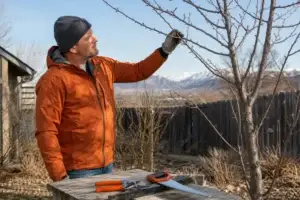
First, mark the last branch that shows wilt. Then trace the limb back toward the trunk. Make the cut well below visible discoloration, because the fungus may have moved farther through the sapwood than the leaves suggest. An arborist may take another small cross-section to check whether the cut is clean.
Don’t make flush cuts against the trunk. Keep the branch collar, which is the swollen ridge where the branch joins the trunk. The collar helps the tree close the wound. Large cuts need extra care because each wound adds stress.
Cut limbs should leave the property promptly. Don’t stack infected elm beside a shed or fence. Bark beetles can use dead or dying elm wood as a breeding site. Fresh elm logs with bark attached also create a risk when stored as firewood.
Clean tools between cuts. We wipe saws and pruners with an appropriate disinfectant, then let the surface stay wet for the contact time on its label. We use a fresh section of cloth for each cleaning pass. A dirty rag can move sap back onto a clean tool.
Sanitation also means removing storm-damaged limbs and weak elm wood before beetles find it. Small branches may pose less risk in some settings, but firewood piles can protect beetles through cold weather. That is why bark-on elm firewood deserves special attention.
We don’t promise that pruning will save every tree. Hidden infection can remain in the trunk or roots. But early pruning can buy time, especially when we pair it with inspection of nearby elms.
For homeowners in Northern Utah, pruning timing also affects storm safety. Our notes on when to trim trees in Utah can help with routine work, but suspected disease needs a tree-specific plan rather than a calendar rule.
Step 3: Decide Whether Professional Fungicide Injection Is Appropriate
Professional injection is one option for early-stage Dutch elm disease treatment. It means placing a fungicide into the trunk so the tree can move it through its water-conducting tissue. This is very different from spraying a product around the base of the tree.
We consider injection only after checking the diagnosis and the tree’s health. The tree needs enough living tissue to move the material. Severe wilt, major root damage, or advanced crown loss lowers the chance of a useful response.
Ask the arborist four plain questions:
- What signs support the diagnosis?
- How much of the crown still looks viable?
- What result should we expect, and when?
- How often would the treatment need to be repeated?
Repeat work is part of the decision. Research gathered from plant handbooks and arborist sources shows that injection claims often have less independent proof than their marketing suggests. One handbook labels trunk injection the least effective option. It also warns that repeat applications may be needed over the tree’s life, possibly every other year.
That doesn’t make injections useless. They may help protect a valuable elm when the disease is caught early. But they aren’t a substitute for pruning, sanitation, removal of beetle breeding wood, or root-graft control.
Injection also needs the right equipment and training. DIY products usually don’t provide the same systemic uptake as professional macro- or micro-injection work. Poor placement can injure the trunk, while the wrong treatment can waste time during a fast-moving infection.
We price the decision around the tree, not the bottle. A healthy elm with limited symptoms may be worth an injection plan. A tree with widespread dieback may need removal instead. We provide free estimates so homeowners, HOAs, and property managers can compare the likely work with the tree’s condition.
All Wood’s Tree Service, Inc. can review trimming, plant health, injection treatments, and removal as one plan. We’re a locally owned Northern Utah company, and we want you to know what the treatment can and cannot do before work begins.
Step 4: Address Root Grafts and Reduce Future Infection Risk
Root-graft control is a key part of Dutch elm disease treatment when elms grow close together. Neighboring roots can join over time. If one tree becomes infected, the fungus may move directly through that shared root system.
We first map the nearby trees. Note each elm’s distance from the infected tree, trunk size, recent symptoms, and likely root paths. Close spacing doesn’t prove a root graft exists, but it raises the need for a professional assessment.
General Dutch elm disease guidance describes control as combining sanitation with measures to reduce spread between connected trees. Removing a newly infected tree quickly can also lower the chance that the fungus reaches its roots.
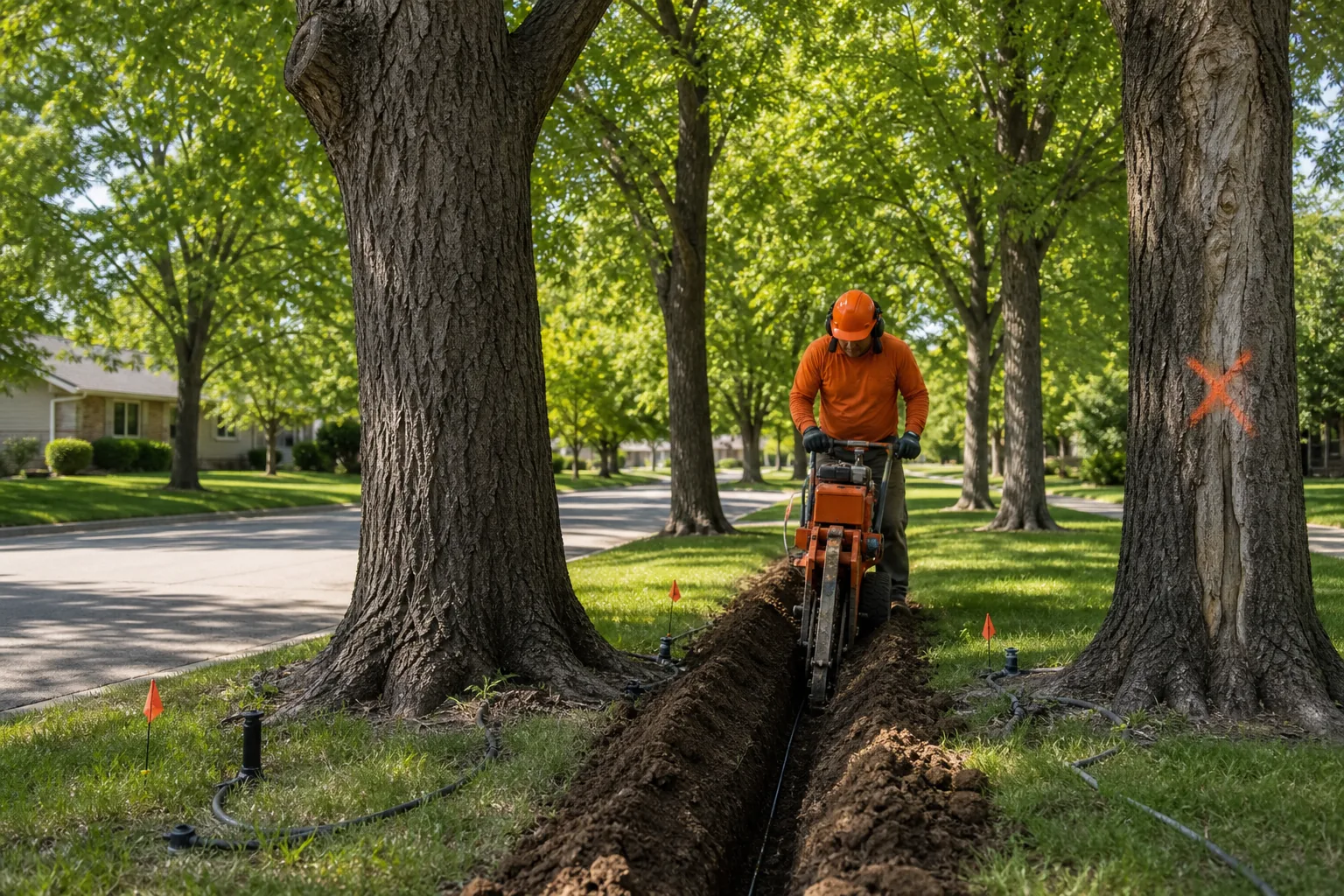
Mechanical trenching can sever roots between diseased and healthy trees. This work needs care. Digging in the wrong place may injure a healthy tree or hit irrigation lines, gas lines, or other buried utilities. We don’t recommend trying to trench by guessing where the roots run.
Chemical root-graft destruction uses a fumigant placed into deep holes between trees. Sources describe this method as a last resort because it can affect soil health and may need regulatory approval. A professional must decide if it is lawful and suitable for the site.
Future protection starts with sanitation:
- Remove dead elm limbs before bark beetles use them.
- Dispose of bark-on elm wood through an approved local method.
- Inspect nearby elms during the growing season.
- Keep new plantings away from infected root zones when possible.
- Ask about resistant Asian elm or hybrid cultivars for replacement trees.
Resistant elm cultivars can make sense for new plantings, but “resistant” doesn’t mean immune. We still inspect them and keep dead wood out of the yard. Prevention works best as a property-wide habit, not as one treatment on one trunk.
Step 5: Remove Unsalvageable Trees and Plan Ongoing Monitoring
Tree removal becomes the safer Dutch elm disease treatment when infection has progressed too far to save the tree. A dead or declining elm can become a hazard. It can also leave bark beetles a place to breed.
We assess the trunk, main limbs, crown loss, lean, root zone, and targets below the tree. Targets include homes, garages, sidewalks, parked cars, play areas, and utility lines. A tree that looks stable on a calm day may still fail during wind or a wet snow.
Don’t cut a large elm yourself when it sits near a structure or line. Sectional removal may require rigging, a lift, or a crane. We plan the drop zone before the first cut, then haul the wood away so it doesn’t sit beside healthy elms.
Stump grinding is often the next step. It removes the stump below grade and makes the area easier to replant or maintain. It doesn’t replace disease sanitation, though. Nearby elms still need inspection, and bark-on wood still needs proper handling.
After removal, set a monitoring plan. Walk the property each month during the growing season. Look for one-sided wilt, sudden leaf loss, dead twigs, bark damage, or fresh dieback in nearby elms. Take dated photos from the same spots so small changes are easier to see.
Property managers and HOA boards should keep a tree map. Mark each elm, record inspections, and note any pruning or removal. A shared record helps the next crew act before a small problem spreads across a row.
All Wood’s Tree Service, Inc. handles safe removal, trimming, stump grinding, and emergency cleanup in Northern Utah. We offer free estimates, plus 24-hour emergency cleanup when storm damage creates an immediate hazard. Serving Northern Utah since 1995, we’re not just a tree service, we’re your long-term property care partner.
Frequently Asked Questions About Dutch Elm Disease Treatment
Can a tree recover from Dutch elm disease?
A tree may recover when the disease is found early and infected limbs are removed well below the affected wood. Recovery isn’t guaranteed because unseen infection may remain in the trunk or roots. We judge the crown, trunk, root risk, and nearby trees before recommending pruning or an injection treatment.
What is the best treatment for Dutch elm disease?
The best treatment depends on how far the disease has moved. Early cases may justify sanitation pruning with professional assessment. Advanced cases often need removal to limit spread. Trunk injections may help some early-stage trees, but they require professional work and repeat applications, so we don’t treat them as a stand-alone cure.
Can you stop Dutch elm disease from spreading to nearby trees?
You can reduce spread, but no single action guarantees control. Remove dead elm wood quickly, avoid storing bark-on elm firewood, inspect nearby trees, and assess possible root grafts. If roots connect infected and healthy trees, mechanical trenching or another professional barrier may be considered.
Are fungicide injections worth it?
Fungicide injections may be worth considering for a valuable elm with early symptoms and enough healthy crown to respond. They cost more when repeated over time, and independent sources disagree with strong marketing claims. We recommend asking for a diagnosis, expected outcome, treatment schedule, and removal plan if the tree declines.
Should I remove a dead elm right away?
A dead elm should be assessed promptly and removed when it poses a hazard or could support bark beetles. The longer an infected tree remains, the more time the disease may have to spread through roots. Keep people away from hazardous limbs and arrange a professional inspection before cutting.
Conclusion
Start with a diagnosis, then act quickly on sanitation and infected wood. Save early cases only when the tree has a fair chance to respond, and remove advanced cases before they threaten people or nearby elms. If you’re in Northern Utah, ask All Wood’s Tree Service, Inc. for a free estimate and a clear plan for pruning, injection treatments, removal, or stump grinding.