Most tree fungus problems don’t have a simple spray fix. Many common tree diseases have no single documented treatment, so the first job is correct identification. We’ll show you how to inspect the tree, reduce infection pressure, match care to the disease, and know when professional help is the safer choice.
Step 1: Inspect the Tree and Identify the Likely Fungus
Good tree fungus treatment starts with a close look, not a trip to the garden store. Walk around the whole tree and note where symptoms begin, how fast they spread, and whether they affect leaves, needles, bark, branches, or roots.
Take clear photos, but don’t treat a photo as a diagnosis. A pale leaf may point to fungus, iron chlorosis, drought stress, or insect damage. In Northern Utah, alkaline soil can cause iron chlorosis, which often looks like disease on maples, oaks, aspens, and some fruit trees.
Look for clues that narrow the field:
- Brown bands on pine needles can point toward Dothistroma needlecast. A red band may divide dead tissue from the green base.
- Yellowing on older needles may fit Cyclaneusma needlecast. Light-green spots can grow darker before the needles fall.
- Sunken bark cankers suggest a branch or trunk disease. Black fruiting structures may release spores during wet weather.
- Conks or mushrooms near the trunk base can signal internal decay. They don’t tell us the full extent of the damage by themselves.
- Reddish-brown roots, poor vigor, sudden wilt, and weak anchorage can fit Phytophthora root rot.
Write down the tree species and the date. Note whether symptoms sit on new growth or older growth. Also check for a recent wound, mower strike, broken limb, compacted soil, or sprinkler that keeps the canopy wet.
For a formal sample, follow a plant clinic’s collection rules instead of sending loose leaves without context. Proper samples and clear symptom notes matter when a disease needs identification.
We also check for insect damage before calling a problem fungal. Pitch tubes, exit holes, sawdust, or fading needles may point to beetles instead. Our guide to spotting Utah pine beetle damage can help you separate those signs from needle disease.
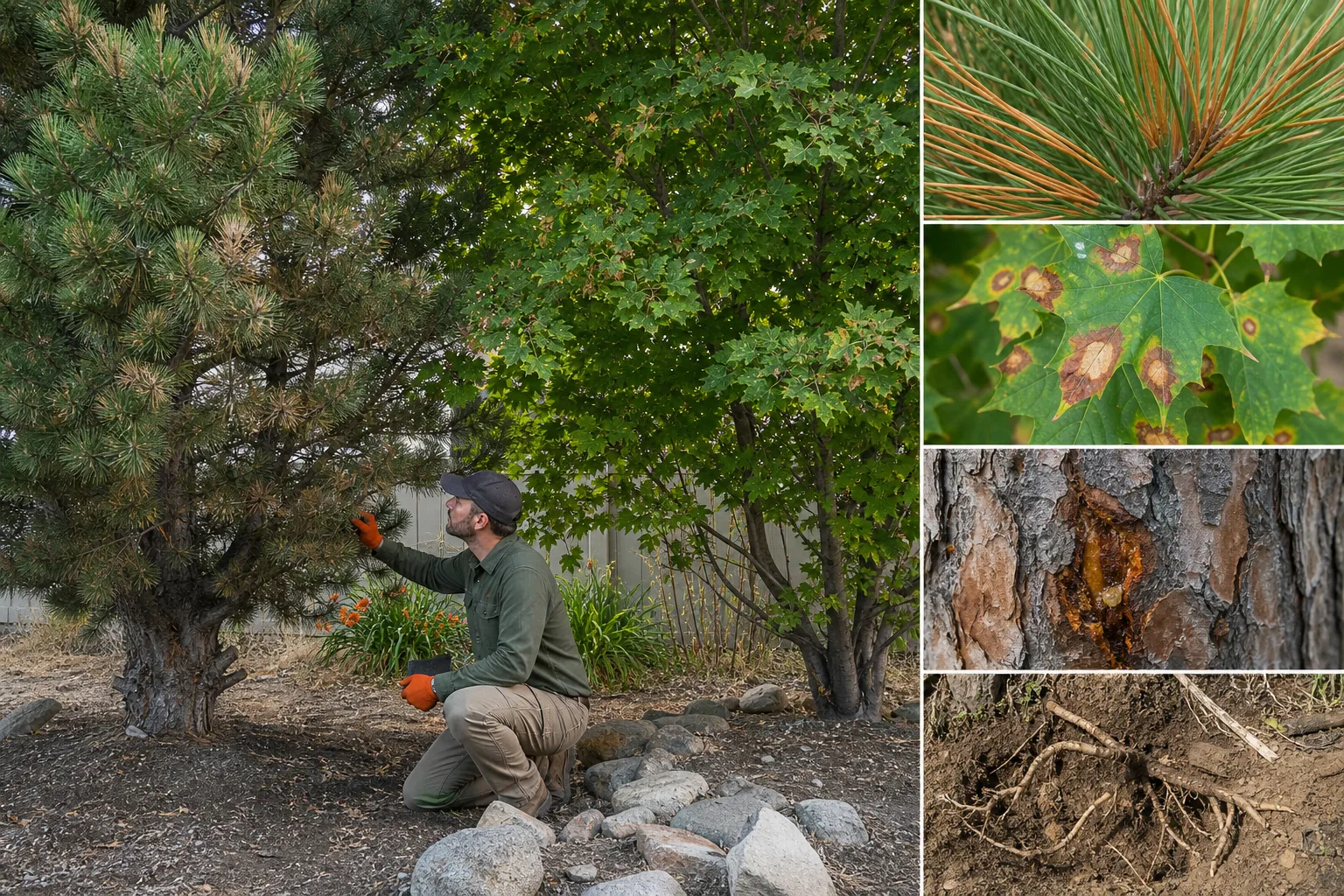
Milestone: By now, you should have the tree species, symptom locations, a rough timeline, and photos of the affected parts. Don’t spray until those facts point toward a likely disease.
Step 2: Remove Sources of Infection and Improve Tree Health
Most tree fungus treatment plans work better after we remove the conditions that help spores spread. Fungus often gains ground when foliage stays wet, roots sit in poor drainage, or a stressed tree has fresh wounds.
Start with sanitation. Remove fallen leaves and needles beneath a badly affected tree when the disease overwinters in that material. Bag or dispose of the debris according to local rules. Don’t move infected branches to another part of the yard.
Prune dead or clearly diseased wood during dry weather. Cut back to sound wood when the disease and tree structure allow it. Clean the cutting tool between trees and between questionable cuts. A clean cut won’t cure a trunk infection, but it can reduce the chance of carrying spores to healthy tissue.
Don’t remove large limbs near a roof, power line, or walkway yourself. A heavy branch can swing as it comes down, even when the cut looks simple from the ground.
Next, fix moisture problems. Turn off overhead sprinklers that hit needles or leaves. Water the root zone slowly in the morning. Aim the water across the drip line rather than against the trunk. Deep watering helps a drought-stressed tree, but saturated soil can worsen root disease.
Check the mulch ring, too. Keep mulch away from the trunk flare. A thick, wet layer against bark can hold moisture where pests and decay organisms gain entry. Don’t add fertilizer just because leaves look pale. If the issue is iron chlorosis or root damage, extra nutrients may miss the cause.
Phytophthora root rot can cause discolored reddish-brown or black fine roots, poor vigor, slow growth, sudden wilting, and leaf loss. Treatment depends on the diagnosis, tree, and site.
We treat the site as part of the problem. That may mean correcting irrigation, removing infected wood, improving clearance, or reducing competition around the tree. A spray cannot repair compacted soil or bring back roots that have already died.
Use this decision rule: if the problem is on leaves or needles, sanitation and canopy airflow may help. If it reaches the trunk, root crown, or major roots, pause before pruning or spraying and get an assessment.
Step 3: Match Treatment to the Disease and Application Timing
Tree fungus treatment is disease-specific. The right product at the wrong time can do little, while a well-timed protectant may stop new infections on healthy tissue.
Needlecast diseases show this timing gap clearly. Brown spot needlecast symptoms occur from August through October in the USDA Forest Service disease material. Cyclaneusma can affect older needles through the growing season. Dothistroma causes yellow or tan spots that become brown bands, while Swiss needlecast causes browning and early loss of two- and three-year-old needles.
These clues don’t give us permission to guess. They tell us what to discuss with an arborist or extension specialist before application.
Use the symptom clues in this disease reference to narrow the problem, not to skip a diagnosis.
Fungicides generally protect healthy tissue. Contact products stay on the surface and need even coverage. Systemic products move inside the tree, but repeated use can select for resistant strains. Follow the label, wear the listed protective gear, and never mix products unless the label allows it.
Some diseases have no useful chemical cure after infection is established. Cytospora is one example in the research material. Oak leaf blister often has a short infection window in cool, wet spring weather, so treatment after symptoms appear may be too late.
Application timing also depends on the disease. Some foliar diseases need protection before spores infect new leaves. Others show symptoms months after infection. If you see a recurring pattern, record when symptoms first appear each year. That note can be more useful than a one-time guess.
We don’t recommend a broad spray “just in case.” Treatment details can vary by disease, and a product label may not name a specific product for every situation. That lack of detail is a warning: the label and diagnosis must come before the application.
Milestone: You should now have a likely disease, a symptom match, and a timing window. If you can’t connect all three, choose prevention and professional diagnosis over trial-and-error chemicals.
Step 4: Apply Prevention Practices Through the Growing Season
Prevention is often the most dependable part of tree fungus treatment, especially when no documented cure exists. Our review found prevention guidance for only a portion of the disease entries, yet the advice that did appear was consistent: start with healthy plants, clean work habits, and fewer wounds.
Build a seasonal check routine:
- In spring, inspect new leaves, buds, and branch unions before wet weather spreads spores.
- During summer, check soil moisture below the surface and watch for drought stress.
- In late summer, inspect older pine needles for bands, spots, and early loss.
- After storms, remove broken limbs safely and cover no wounds with paint or dressing.
- In fall, clear infected leaf and needle debris when sanitation helps break the disease cycle.
Give branches room to dry. Thin crowded growth only when a trained pruner can preserve the tree’s structure. Over-pruning creates fresh wounds and can cause weak regrowth. Structural pruning means removing selected limbs to improve long-term form, not stripping the canopy for quick results.
Water at the root zone and adjust the schedule after rain. A tree under drought stress may be more vulnerable to pests and disease, but a tree sitting in saturated soil can lose roots. Our notes on drought stress and tree health in Utah explain the warning signs we want homeowners to watch before decline becomes severe.
Choose disease-free nursery stock when planting. Give new trees enough room for mature growth. Keep mowers and string trimmers away from the trunk. Disinfect tools after work on a diseased tree.
Don’t assume every mushroom means immediate removal. A fruiting body is a clue, not a full risk rating. But mushrooms or conks at the root flare deserve a professional look because they may point to decay inside the wood.
Recovery takes time. New growth may look better during the next growing season after stress is corrected, while structural repair takes much longer. Track the canopy across seasons instead of judging success after one week.
Step 5: Know When to Call All Wood’s Tree Service, Inc.
Call All Wood’s Tree Service, Inc. when symptoms involve the trunk, root crown, large limbs, or more than a small part of the canopy. We can assess whether the tree needs treatment, structural pruning, monitoring, or removal.
Professional help is also the right choice when:
- The tree leans toward a home, road, fence, or play area.
- Large conks or mushrooms grow from the trunk or base.
- A canker circles a major branch or trunk section.
- More than half the canopy has declined.
- The tree has suffered storm damage or a split leader.
- You need injection treatments, which are targeted chemicals applied through the trunk.
- You can’t safely reach the affected branches from the ground.
We start with the tree and site. That means checking the canopy, bark, root flare, soil, nearby irrigation, and targets below the limbs. We explain what we see in plain terms. If the tree can be saved, we’ll say so. If removal is the safer answer, we’ll explain the reason and the next step.
Our work may include plant health care, structural pruning, tree removal, stump grinding, or emergency cleanup. Stump grinding removes the visible stump below ground level, which helps reclaim the area and reduces the chance of new shoots or fungus growing from the old stump.
For HOAs and property managers, a written work plan can help set priorities across several trees. Start with hazards. Then address trees with a fair chance of recovery. Routine pruning can wait when a split trunk threatens a building.
We’re not just a tree service, we’re your long-term property care partner. All Wood’s Tree Service, Inc. provides free estimates and 24-hour emergency cleanup for Northern Utah properties. We’ve been serving Northern Utah since 1995.
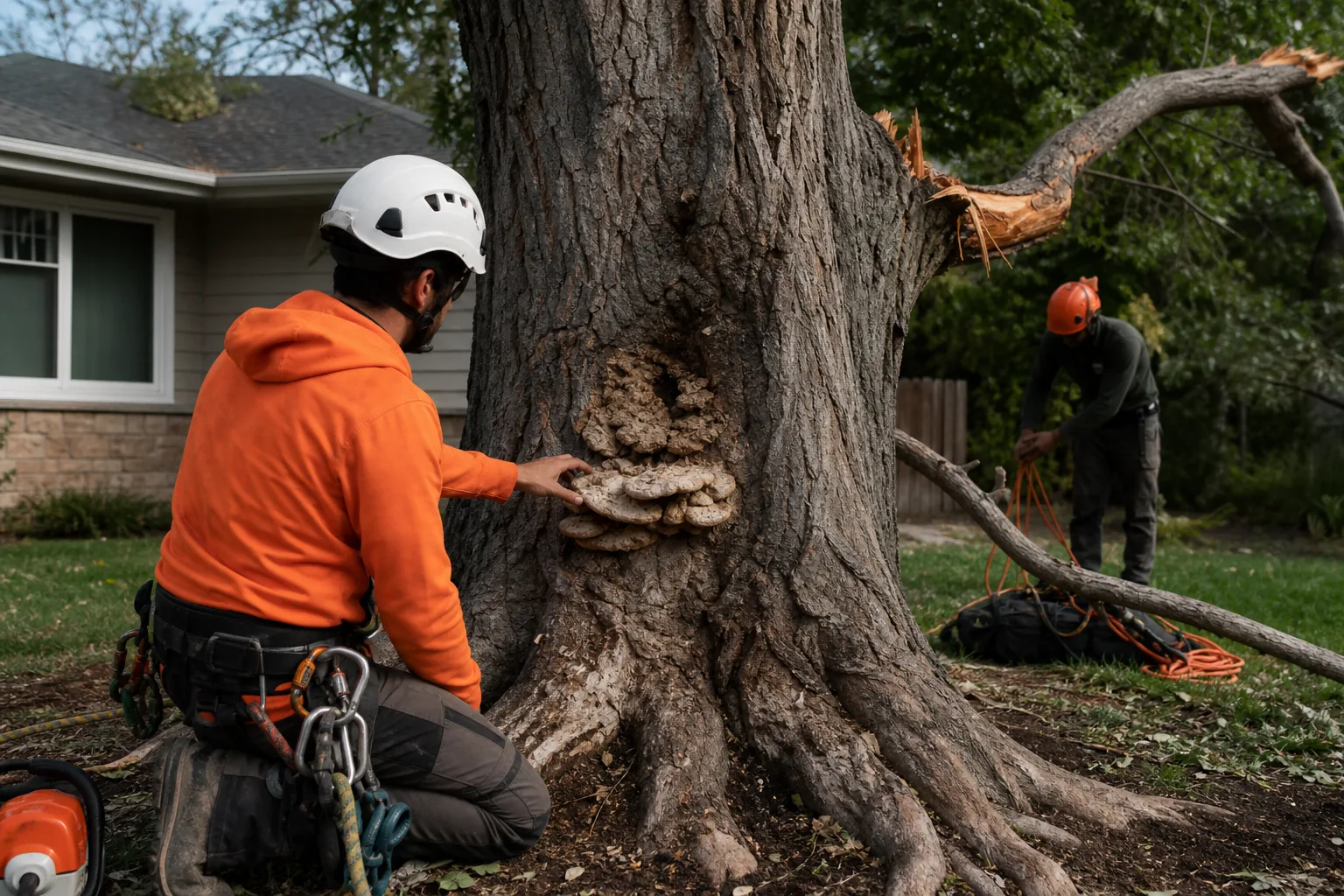
Make the call sooner when safety is involved. Disease can wait for a planned assessment. A cracked limb over a roof cannot.
Frequently Asked Questions About Tree Fungus Treatment
What is the best tree fungus treatment?
The best tree fungus treatment depends on the disease, tree species, and infection stage. Start with inspection and sanitation instead of a broad spray. Some needlecast diseases may respond to timed protective fungicides, while root rot often needs drainage changes, resistant planting, or a targeted professional plan.
Can a tree recover from a fungal infection?
A tree can recover from some fungal infections when the disease is limited and stress is corrected. Remove infected material when safe, improve watering, and protect new growth during the right season. A trunk canker, major root loss, or internal decay lowers the chance of recovery and calls for an arborist assessment.
Should I cut off branches with fungus?
You should remove dead or clearly infected branches only when the cuts are safe and the disease allows pruning to help. Work in dry weather and clean tools between cuts. Don’t climb or cut large limbs near structures, wires, or roads. Poor pruning can add wounds and spread the problem.
Do mushrooms on a tree mean it must be removed?
Mushrooms do not automatically mean a tree must be removed. They are fruiting bodies that may point to decay, but they don’t show how much sound wood remains. A professional should inspect mushrooms at the trunk base, root flare, or major union, especially when the tree leans or drops limbs.
When should I call a tree care professional?
Call a tree care professional when fungus affects the trunk or roots, more than half the canopy is damaged, or a limb threatens property. Also get help when you need an exact diagnosis or injection treatment. All Wood’s Tree Service, Inc. can assess the risk and explain whether care or removal makes sense.
Conclusion
Start with identification, then fix moisture, wounds, and sanitation problems before reaching for a fungicide. If the trunk, roots, or large limbs show signs of decay, schedule an assessment with All Wood’s Tree Service, Inc. and let a trained crew set the safest next step for your property.