Many Utah homeowners enjoy visits from deer and other wildlife, especially in northern Utah where neighborhoods often border wildlands. However, the wrong kind of fence can turn deadly for these animals. Each year, dozens of deer are fatally injured by common residential fences. In one gated community in Ogden, Utah, residents saw several deer die trying to escape – at least three were impaled on sharp wrought-iron fence spires. These tragic incidents highlight the need for wildlife-friendly fencing solutions that keep properties secure without harming local wildlife. In this article, we’ll delve into fencing dangers for wildlife, why deer and other animals are at risk, and what safer fencing options homeowners, HOAs, and builders should consider in Utah.
How Common Fences Can Harm Wildlife
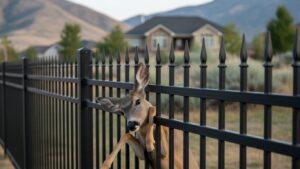
Fences might seem innocuous, but for wildlife they can be invisible traps and lethal barriers. Deer and other ungulates (hoofed mammals) often attempt to jump fences or squeeze through gaps as they move through neighborhoods. If a fence is poorly designed for wildlife, the results can be gruesome:
- Impalement on Spikes: Wrought-iron or metal picket fences with pointed spikes are consistently deadly to animals. A deer that misjudges a jump can land on the spikes and be impaled through the chest or abdomen. “It’s always fatal. No deer survives being impaled,” notes one wildlife rescuer. Sadly, Utah Division of Wildlife Resources (DWR) staff respond to many calls of deer found impaled and hanging on backyard fence spikes. The animal often suffers a slow, agonizing death, and if alive when found, must usually be euthanized to end its suffering.
- Snagged or Tangled in Wires: Standard wire fences (like barbed wire or field fencing) can easily snag wildlife. A deer or elk jumping over a wire fence may catch a hind leg on the top wire, leaving it dangling helplessly. Barbed wire also causes deep cuts that can lead to infection or death even if the animal breaks free. Young fawns are especially vulnerable – they can’t leap high and may try to crawl under, only to get stuck on low wires or fatally separated from their mothers.
- Entanglement in Chain-Link or Mesh: While solid-looking, chain-link fences pose their own hazard. Deer often get their hooves caught between the links when trying to jump over, resulting in broken legs or the animal flipping and severely injuring itself. If the top of a chain-link fence is loose or has an exposed edge, a jumping deer’s leg can become trapped, similar to barbed wire snags. Additionally, mesh or netting fences (such as garden deer netting) can ensnare deer or tangle up their antlers, leading to panic and injury.
- Gaps and Railings: Fences with wide gaps between rails or pickets might tempt animals to squeeze through. Deer, especially fawns, can get their heads or bodies wedged between rails if spacing isn’t wildlife-conscious. If a deer with antlers sticks its head through a fence with bars, the antlers can get stuck, leaving the animal trapped. Smaller wildlife like foxes, skunks, or pets can also get stuck in narrow openings or be unable to climb out of walled yards.
- Collision and Confusion: Some fence types (especially those with thin wires or invisible deer netting) are hard for animals to see. Wildlife can run into these barriers at full speed, leading to injuries. There’s also a risk to birds: low-visibility wires or netting can cause birds to collide with fences, much like they do with windows. Studies in Idaho found that marking fences with flagging drastically reduces bird strikes (for example, marking fences cut sage-grouse collisions by over 80%).
Why do these accidents happen so frequently? Deer have excellent jumping abilities (adult mule deer can clear 6–8 feet under ideal conditions), but real-world situations make fence jumps perilous. If the ground is uneven, or if a deer is being chased by a dog or predator, it might not clear a fence cleanly.
In a moment of panic or misjudgment, a deer fleeing danger can stumble and come down on a fence’s spikes or get hung up in wires. Young deer are especially at risk, as they are smaller and less agile – many of the fence casualties are fawns or yearlings. In fact, one Utah State University study found 90% of dead deer found along fences were juveniles that likely couldn’t get over or under the barrier.
The cumulative impact is larger than many realize. Researchers estimate that, on average, one big game animal (deer, elk, etc.) dies from fence entanglement per year for every 2.5 miles of fence in the West. Over hundreds of miles, that adds up to hundreds of wildlife deaths annually just from fences. Even in suburban settings, a patchwork of backyard fences can disrupt wildlife travel routes and become deadly obstacles.
Wildlife Common to Northern Utah Affected by Fencing 
Northern Utah’s mountains and foothills are home to abundant wildlife that often roam into residential areas. The most frequent backyard visitors are mule deer, which are known to browse on landscaping and travel through neighborhoods. However, they are not alone – other animals in Utah are impacted by fence design:
- Deer (Mule Deer): Mule deer are the primary victims of dangerous fencing in Utah neighborhoods. They regularly navigate through populated areas in search of food and water. In doing so, they encounter yard fences, garden enclosures, and HOA perimeter fences. As described, deer can be impaled on spiked metal fences or entangled in wire or chain-link. There have been multiple instances across Northern Utah of deer dying on fences – for example, the Ogden gated community incident where a buck was found skewered on an iron fence. Neighbors reported seeing deer literally hang from fence spikes, a traumatic sight no one wants in their yard.
- Moose: Yes, Utah’s mountain towns and foothill suburbs occasionally see moose wandering through. Moose are much taller (up to 7 feet at the shoulder) and less adept at jumping. A typical 6-foot yard fence that a deer might attempt could be essentially impossible for a moose to jump. Moose may instead try to push through or get stuck half-way. There have been cases of moose trapped inside fenced yards or entangled in gates while trying to squeeze through. A moose’s long legs can also get caught in railings or awkwardly straddle a fence. Homeowners should be aware that what keeps a dog in might trap a moose unexpectedly wandering by.
- Elk: In more rural northern Utah communities or on properties near open rangeland, elk can come into contact with fences. Elk can jump, but like deer they risk catching legs in wires or spikes. Given their larger size, an elk that gets stuck can also do significant damage to the fence and itself. Elk have been observed getting hung up when trying to cross standard livestock fences or decorative gates, requiring rescue or resulting in injuries.
- Pronghorn (Antelope): In some northern Utah valley areas and rangelands, pronghorn antelope range freely. Pronghorn rarely venture into dense neighborhoods, but they do encounter perimeter fences of properties. Unlike deer, pronghorn prefer to go under fences rather than jump. A fence with a low bottom wire or slats can block pronghorn entirely. They may pace along a fence line looking for a low spot, expending energy and risking predation. If they try to force through, they can get stuck. Proper bottom clearance (which we’ll discuss later) is critical for allowing pronghorn and similar wildlife to pass.
- Other Wildlife: Smaller mammals (foxes, coyotes, bobcats) usually can scramble under or over most residential fences, but they can still get into trouble. For instance, a fox kit or raccoon might get its head stuck in a gap in a wrought-iron fence if spacing is wide. Skunks or porcupines could wedge in tight spots or dig halfway under a fence and get stuck. Birds of all sizes, from hawks to grouse, might hit unseen fence wires or netting, causing injury. While deer are the most commonly reported victims, a truly wildlife-friendly fence aims to reduce hazards for all creatures that may visit your property.
Fence Types Dangerous to Wildlife (and Why)
Not all fences are equal when it comes to wildlife safety. Let’s examine some common fence types or features found in home and community settings, and why they can be dangerous for animals:
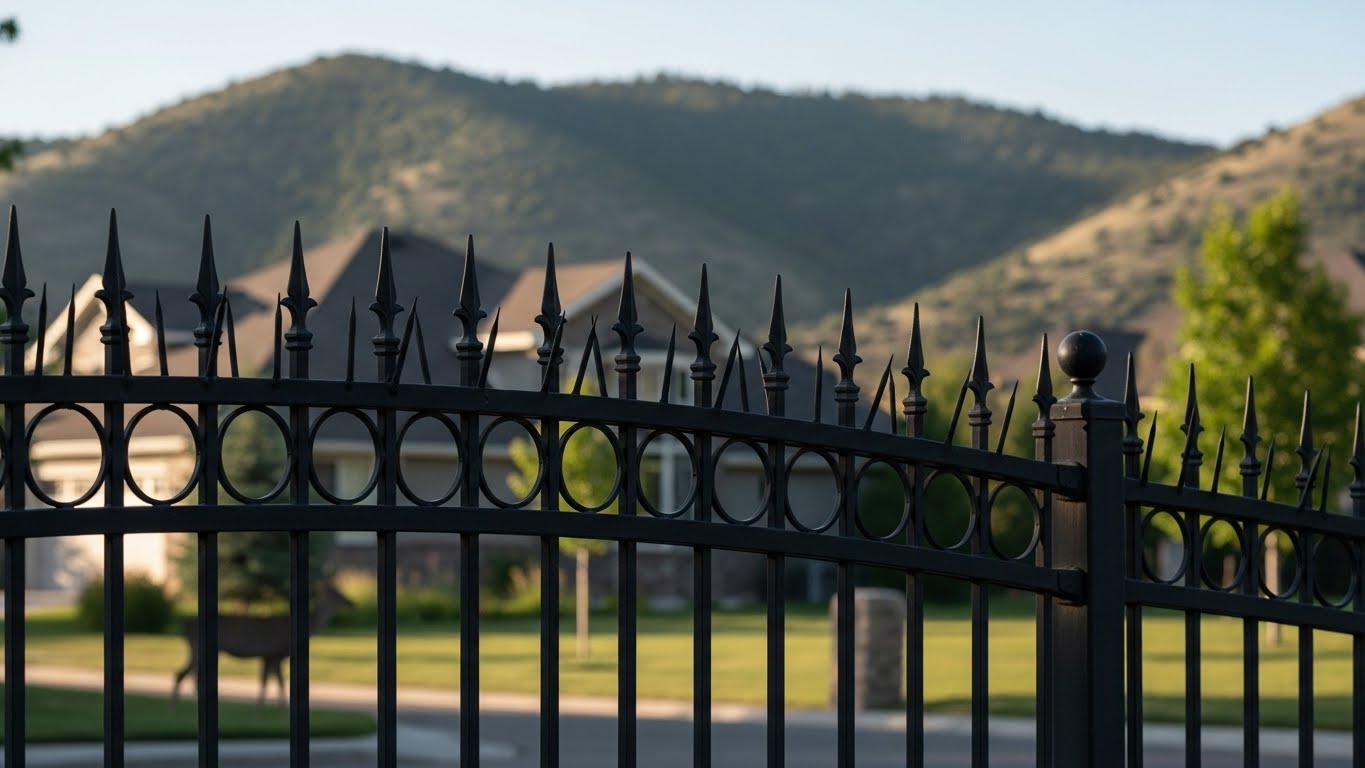
- Spiked Top Wrought-Iron Fences: These decorative metal fences with vertical bars and pointed finials (spikes) on top are perhaps the most lethal to deer and similar animals. They often stand 4 to 6 feet high – a height deer will try to jump. If a deer doesn’t clear the fence, the downward force drives the spikes into its body. According to wildlife rescuers, this fence design is consistently deadly because an impaled deer almost never survives. The spikes can also snag on animals’ hides or puncture internally as the animal struggles. Note: It’s not just deer – any animal large enough to attempt scaling it (elk, mountain lions, even dogs) could be impaled or injured by the spikes. Why people use them: Often for aesthetics and security, as the pointed tops deter human intruders. But experts say the security benefit is overrated (a determined person can still climb it), whereas the wildlife risk is unacceptably high.
- Picket Fences with Sharp Finials: Traditional wooden or vinyl picket fences sometimes have pointed or arrow-shaped tops on each picket. These are usually shorter (3–4 feet), but can still pose a hazard. A deer might normally hop a 4-foot fence, but if it tries and slips, those sharp pickets can stab the animal’s belly or legs. While wooden picket points are usually broader and slightly more forgiving than metal spikes, they can still impale or lacerate an animal that falls on them. Additionally, smaller animals like fawns or pets could get pierced by these if they try to climb through. Rounded or flat-top pickets are much safer alternatives.
- Chain-Link Fences: Chain-link is common for yards and parks because it’s affordable and durable. The problem is the top of a chain-link fence can act like a trap for jumping animals. A deer attempting a 5-foot chain-link fence might almost make it, but one hind foot can slip down into the diamond-shaped wire gap as it goes over. The weight of the deer then causes the wire to cinch around the leg, leaving the deer hung upside-down. There are numerous cases of deer found alive but dangling by a leg from chain-link fences. Often the leg is broken or the deer has to be sedated for disentanglement. Even when they escape, severe ligament or tendon injuries can result, and the stress can be fatal. Also, if the chain-link mesh is loose or the top has a cut wire, it may have sharp edges that cut into the animal. For homeowners, if you have chain-link, ensure there is a rounded top rail pipe covering the mesh edge – this at least provides a smooth bar for an animal to hit and might prevent a hoof from getting wedged. However, chain-link will never be as wildlife-friendly as some other designs due to the mesh openings.
- Barbed-Wire and Woven Wire Farm Fences: On larger properties or around community perimeters, you might find livestock-style fencing: typically 3–5 strands of barbed wire, or woven wire mesh topped with barbed strands. These are highly problematic for wildlife. Barbed wire is essentially a series of small spikes along a wire – it can easily tear flesh and catch on fur. Animals that try to jump and don’t clear the top barbed wire can get snagged by a leg or chest, resulting in deep cuts and the animal being stuck dangling. Many deer and elk have been found with barbed wire wrapped around their limbs or antlers after struggling to free themselves. Woven wire (mesh) fences create a rigid barrier; adult animals might clear it, but fawns can’t and may be separated from their mothers, pacing along the fence until they collapse. If woven wire is topped by a strand or two of barbed wire (a common practice), it becomes a double hazard – an animal that can’t jump over the mesh might still attempt and then get caught on the barb at the top. In Utah’s rural subdivisions or farm-adjacent lots, you might inherit old barbed wire fences – consider replacing or modifying them for safety.
- Tall Solid Fences (Privacy Fences): A 6- to 8-foot solid wood or vinyl privacy fence is often thought to “keep wildlife out.” In truth, deer can jump 6-8 feet under the right conditions, and solid fences have their own issues. Because the animal can’t see what’s on the other side, it might be hesitant – but if panicked or lured by something (e.g., a dog or food source), it could still attempt the jump. If it fails, it won’t be impaled (no spikes on a flat wood top), but it could crash hard into the fence or partially clear and tumble into the yard, possibly breaking a leg. There have been cases of deer successfully leaping into a fenced yard and then being unable to find their way out (leading to panic and property damage, or the deer injuring itself on patio furniture, etc.). For moose and elk, a 6-foot fence might effectively pen them in if they somehow end up inside, since they typically won’t jump out. Bottom line: tall solid fences block wildlife movement corridors – they may not cause grisly injuries like spikes or barbs, but they can still lead to stress, exhaustion, or unwanted confrontations (like a deer trapped with your dog). If you live in a high-wildlife area, consider whether a full enclosure is necessary, and if so, ensure any gates are left open (when possible) to allow animals to escape.
- Electric Fences: Some homeowners use electrified wire (low voltage shock fences) to deter deer from gardens or yards. These can be safe if properly installed – typically, an electric deer fence is a few wires on posts, relatively easy for animals to duck under or jump over if not deterred. The shock is meant to condition the deer not to enter. Electric fences generally don’t entangle or impale, so in that sense they’re more wildlife-friendly than physical barriers. However, they must be maintained: a loose electrified wire can entangle an animal, and if the voltage is too high or pulses too frequent it could injure smaller animals or pets. Always follow guidelines and local laws for electric fencing. In residential areas, these might not be allowed by code or HOA rules anyway. If deer exclusion is the goal, a properly installed 8-foot deer fence (often a mesh or wire that is highly visible, or a double-layer fence system) or electric deterrent system can work without harming deer – but these solutions should be implemented with expert advice.
Wildlife-Friendly Fencing: Design Guidelines and Safer Options
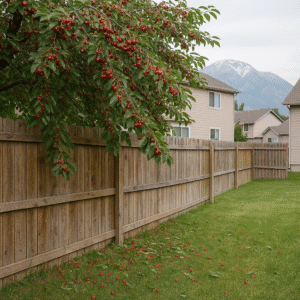
The good news is that fence designs can be modified to dramatically reduce the risk to wildlife while still serving homeowners’ needs for security, privacy, or pet containment. Utah’s Division of Wildlife Resources and other wildlife agencies have published guidelines for “wildlife-friendly fencing.” Here are some key principles and options:
- Remove or Modify Spike Tops: If you have an existing wrought-iron fence with speared finials, retrofit it to eliminate the sharp points. One simple fix is welding a horizontal metal bar along the top of the fence, covering or replacing the spikes. This maintains the look of the fence but provides a smooth top rail so an animal’s chest won’t be pierced if it falls short. Homeowners have also cut off the individual spike tips or installed protective caps. Even something as inexpensive as covering each spike with a piece of rubber garden hose can save a deer’s life. Many communities are encouraging or even mandating these changes. For instance, after repeated deer impalements, officials in Kelowna, BC pushed for a ban on spiked fence designs – at least ten deer had to be euthanized there in just a few months due to wrought-iron spikes. Some HOAs in Utah are now discussing prohibiting new spiked fences and urging residents to modify existing ones, following these humane practices.
- Height and Visibility: Counterintuitively, either very low or very high fences are safer for wildlife than mid-height fences. A fence under 4 feet tall can typically be stepped over or easily jumped by deer (they won’t usually get stuck on a low fence, though they might just enter your yard). On the other end, a fence about 8 feet or taller will deter most deer from even trying to jump. Utah DWR officials recommend, where possible, building fences 8–10 feet tall to exclude deer if that’s the goal. Of course, local ordinances or HOA rules often limit fence height (common residential limit is 6 feet). If you can’t go that high, aim for openness: a solid 6-foot fence is a hard barrier, but if you use materials that the animals can see (like an open wrought-iron or rail fence), the deer can at least perceive the obstacle and judge the jump. Adding flags, ribbons, or reflective tape to the top of wire or mesh fences makes them more visible to both deer and birds. This simple step can prevent collisions and tangling. For example, hanging high-visibility fence markers on barbed-wire lines reduced sage-grouse collisions by over 80%, and it can help deer notice a fence before they hit it.
- Appropriate Spacing: Design your fence with wildlife clearance in mind. A key guideline is to allow at least 16 inches of space under the lowest horizontal element of the fence. This gap lets fawns, small deer, pronghorn, and other small animals crawl under if they can’t jump over. It’s also good for smaller critters like coyotes or bobcats that may pass through without incident. Similarly, provide enough space between the top rails or wires – a 12-inch gap between the top and second wire (or rail) is recommended. This reduces the chance of a jumping animal getting a leg caught between two closely spaced strands. Essentially, a deer should be able to clear the top without simultaneously getting its foot caught in an immediately lower wire. For fences with vertical bars (like ornamental iron or metal fences), ensure the bars are either narrow enough (<6 inches apart) that animals won’t even try to go through, or wide enough that smaller wildlife can slip through easily. Utah officials suggest vertical gaps no greater than 6 inches for residential fencing – this prevents a deer from wedging its head or shoulders in. Standard pool-safe fencing codes (which often use 4-inch gaps to protect children) already meet this, but if your fence has larger gaps, consider adding wire mesh or additional rails to reduce opening size.
- Use Smooth Materials at Critical Points: If using wire fences, choose smooth (uncut) wire for the top and bottom strands instead of barbed wire. Barbs might be acceptable on middle strands if absolutely needed for livestock, but the top and bottom should be wildlife-friendly. A smooth top wire or better yet a rounded top rail will let a jumping animal glide over or bounce off without snagging. Likewise, the bottom should be smooth so animals crawling under won’t get punctured along the back. Some homeowners install a wooden rail at the top of a wire fence – improving visibility and safety – or PVC piping over the top wire. Avoid unnecessary slack in any wire or chain-link; a loose loop can easily catch a hoof. Regular maintenance to tighten sagging wires or repair bent fence sections can prevent many accidents.
- Wildlife Passages: In areas where wildlife frequently traverse, consider incorporating a wildlife passage or break in your fencing. This could be a section of lower fence, a gate left open seasonally, or a specific crossing point. Some Western states even promote “lay-down” fences or sections that can be dropped to the ground part of the year when livestock aren’t present, allowing herds to migrate through. In a neighborhood setting, you might work with neighbors or the HOA to establish corridor gaps (for example, unfenced easements between properties leading to open space). If completely unfenced yards aren’t practical, even using split-rail style fences (with large gaps) or modular fencing that can be temporarily removed can help animals navigate. The Utah DWR has noted that fences, when ubiquitous, fragment habitats and block access to food, water, and shelter for wildlife – so any effort to create safe openings is beneficial.
- Fence Alternatives for Security/Privacy: If the primary reason for a dangerous fence type was security, know that there are alternatives that won’t harm wildlife. For instance, instead of spiked tops to deter intruders, use a tall fence with a flat top and perhaps motion-activated lights or cameras for security. If privacy is the concern, a solid hedge or a wooden privacy fence (with a few wildlife considerations built-in, like a gap at ground level in certain spots or not fully enclosing your yard) can work. Landscaping barriers (thorny bushes, etc.) can supplement shorter fences to keep out human intruders without posing as much risk to animals. Always weigh whether a fence is truly needed; in some cases, no fence or a naturally landscaped boundary is the most wildlife-friendly “fence” of all (though be mindful this won’t contain pets or kids).
Below is a summary comparison of fence features to avoid versus wildlife-friendly features:
| Hazardous Fence Feature | Why It’s Dangerous | Wildlife-Friendly Solution |
| Spiked or pointed fence tops | Impales animals that fall on it – often fatal. | Flat or rounded fence tops (add a top rail or caps to cover spikes). |
| Barbed wire (especially top/bottom strands) | Snags hides and legs; causes deep wounds and entanglement. | Use smooth wire for top and bottom; limit barbed wire use; add flag markers for visibility |
| Low bottom fence wire or board (<12″ off ground) | Traps fawns and small animals; blocks pronghorn – leads to starvation or fence crawling injuries. | Raise bottom of fence ~16″ off ground for clearance (if pet containment isn’t compromised). |
| Narrow gap between top wires (<10″) | Catches jumping deer’s legs between wires, causing flips and breaks. | Space top wires/rails ~12″ apart to avoid creating a leg trap. |
| Loose or sagging wires/mesh | Increases chance of entanglement; a loop can hook a hoof or neck. | Keep fencing taut and well-maintained; use shorter spans or more posts to reduce sag. |
| Poorly visible fencing (thin wire, mesh or netting without markers) | Wildlife and birds don’t see it, leading to collisions or animals running full-speed into fence. | Add high-visibility markers, flags, or use rails; choose fence designs animals can see easily. |
| Wide vertical bars (gap >6–8″) | Animals attempt to pass through, can get stuck halfway (especially heads/antlers). | Use smaller gap for bars (≤6″), or cover large gaps with wire panels. Alternatively, make openings very large (e.g., wildlife can walk through an open gate). |
| Mid-height fences (~4–5 ft) that wildlife try to jump | At a risky height where they attempt but often fail, leading to impalement or entanglement. | Go shorter (<4 ft) and accept wildlife may enter, or taller (~8 ft) to exclude wildlife entirely (if allowed). Avoid the mid-range that entices jumping. |
By implementing these wildlife-friendly measures, fences can coexist with Utah’s wildlife. The aim is to prevent needless injuries and deaths while still meeting human needs. As the Utah DWR puts it, fencing can be designed to meet landowners’ needs “while also keeping wildlife safety, health and movement in mind.” In some cases the DWR even provides materials or assistance to landowners for modifying fences that are dangerous to wildlife (especially when addressing chronic problem areas or during habitat projects).
What Homeowners, HOAs, and Builders Can Do
Everyone involved in residential development – from the individual homeowner up to community planners – has a role in mitigating fence hazards for wildlife:
- Homeowners: If you live in an area frequented by deer or other wildlife, take a look at your own fencing. Identify any of the red-flag features discussed (spikes, low wires, etc.) and consider retrofits. Something as simple as cutting off spear tips or raising the height of a bottom wire with insulators can make a huge difference. Also, talk to your neighbors – one dangerous fence on the block can still snare animals. Neighbors might collaborate on keeping side gate areas open or using similar safe fencing so that wildlife aren’t trapped yard-to-yard. If you plan to install a new fence, choose designs advertised as wildlife-friendly or consult resources from Utah DWR on fence guidelines. Remember, a compassionate fencing choice not only protects wildlife but also spares you and your family the distress of finding a beautiful wild deer suffering in your yard.
- HOAs and Community Associations: HOAs can establish standards that promote wildlife safety. For example, an HOA might prohibit new fencing with exposed spikes or barbed wire in a subdivision. They could also require that any metal picket fences have capped or rounded tops. Some communities mandate gaps at the bottom of perimeter fences or use split-rail fencing along open space boundaries to allow animals passage. Education is key: HOAs in wildlife-heavy areas of Utah (such as those near the mountains or wetlands) should inform residents about local wildlife and how to avoid unintentional harm. Hosting a workshop or sharing a DWR blog post on wildlife-friendly fencing can encourage voluntary improvements. As seen in the Ogden example, HOA leadership became aware of the issue after multiple deer died and committed to working with DWR to modify the fences. Proactively addressing it can prevent such incidents before they happen.
- Builders and Developers: When designing new residential communities at the wildland-urban interface, developers should plan with wildlife in mind. This could mean leaving portions of property unfenced to serve as wildlife corridors, using open-design fencing instead of solid walls, or selecting fence types known to be safer (for instance, masonry walls might block wildlife, but at least they don’t impale – pairing shorter decorative walls with landscaping could be both aesthetic and safer for animals). Developers could also install wildlife escape measures – for instance, one-way gates or small ladder-style steps on fences that allow deer that have gotten in to get back out. While not common, there are creative solutions being tried in some places. Fundamentally, a developer that prioritizes wildlife safety can market the neighborhood as environmentally friendly and avoid saddling future residents with heartbreaking wildlife conflicts. Checking with local wildlife officials during the planning stage can yield recommendations specific to the area and species present.
- Local Government: City or county planners in Utah have started to take note as well. Bylaws or ordinances can encourage or enforce wildlife-friendly fencing standards. We mentioned how a city in British Columbia moved to ban spiked fences after repeated deer deaths. In Utah, the approach has so far been educational (DWR’s 2024 call to landowners to use less-lethal fencing), but nothing prevents a municipality from incorporating wildlife safety into its fencing codes. Citizens can advocate for such measures if their community has experienced problems. Even simple requirements like “no upward-facing spikes” or “minimum bottom clearance on perimeter fences” could be introduced in codes for new fencing.
Ultimately, taking action on safer fencing is a win-win. Wildlife gets to move about safely, and homeowners are spared the damage and sadness that comes with animals struggling on their fences. As one Utah wildlife official said, seeing an impaled or tangled deer is far more traumatic than even finding one hit by a car – largely because we know it was avoidable and “unnecessary”. By making thoughtful fencing choices, we uphold the value of living alongside nature that many Utah residents cherish.
A Wildlife-Friendly Fencing Solution
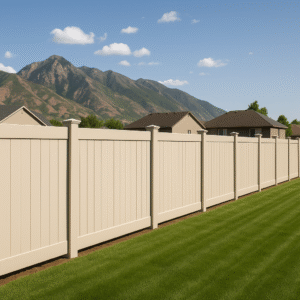
Utah’s natural beauty includes the wild creatures that share our environment. As our neighborhoods expand into wildlife habitat, we must adapt our habits – and our fences – to protect those animals. Dangerous fence designs like spiked iron or barbed wire have no place in residential areas where deer, elk, and moose wander. Fortunately, with a bit of effort, we can make existing fences safer (e.g. covering or removing spikes, raising wires) and choose new fencing designs that allow wildlife to pass unhurt. The goal isn’t to eliminate fences, but to eliminate unnecessary suffering of wildlife caused by fences.
If you’re considering upgrading your property’s fencing, think about more than just keeping deer out of the garden – consider how to keep them (and other animals) safe as they roam. By following wildlife-friendly fencing guidelines, you can enjoy peace of mind that your beautiful yard isn’t a hazard to the beautiful wildlife in your community.
At All Woods, we are passionate about creating fences that blend safety, functionality, and craftsmanship. Our team can help you design and install a fence that meets your needs while also being mindful of local wildlife. From elegant wood fences that deter deer without deadly spikes, to custom solutions for HOA developments, we’re here to guide you in making the responsible choice. Contact All Woods today to learn more about humane and wildlife-friendly fencing options for your Utah home. Your new fence can protect what’s important to you – your family, your property, and the wildlife that enrich your surroundings.
FAQs
Q: Why are wrought-iron fences with spikes so dangerous for deer?
A: Deer often try to jump over fences around 4–6 feet high. If the fence has upright spikes and the deer doesn’t clear it, it can be impaled on the spikes. This type of injury is almost always fatalcbsnews.com. Spiked fences basically act like spears waiting for a slipping animal. Even a successful jump can turn deadly if a trailing leg catches a spike. It’s far safer to have a flat-top fence or add a top rail so there are no impaling points.
Q: Do I really need to worry about fences in a suburban area?
A: If you live anywhere near foothills, canyons, or open spaces in Utah, chances are high that deer or other wildlife pass through occasionally. Even within city limits, greenbelt corridors or golf courses bring wildlife into neighborhoods. DWR officials say they frequently have to deal with wildlife stuck in residential fencesgephardtdaily.com. So yes, it’s worth considering your fence’s impact. Urban deer are very common in Northern Utah – just ask residents of towns like Bountiful, Layton, or Park City who see deer in their yards regularly.
Q: What is a “wildlife-friendly” fence exactly?
A: It’s a fence designed or modified to allow animals to move freely without injury. Key features of wildlife-friendly fences include: adequate height or visibility so animals don’t attempt dangerous jumps, a smooth top (no spikes or barbs), a high bottom clearance (about 16 inches) for young animals to crawl under, wider spacing between wires/rails, and overall sturdy construction without loose wiresgephardtdaily.combiophiliafoundation.org. Wildlife-friendly fences keep livestock or pets in (or deer out of a garden) while minimizing harm to animals that encounter the fence.
Q: I want to keep deer out of my yard. What’s the safest fence that still works?
A: To exclude deer, the fence needs to be very tall (around 8 feet) or designed in a way that deer won’t attempt to jump. A solid 8-foot privacy fence can work, but not all locales allow that height. Another approach is a slanted or double-layer fence: for example, two 4-foot fences a few feet apart – deer won’t jump because they perceive the width as well. Electric deer fencing (using a mild shock) can train deer to stay away without a physical barrier.
Whichever method, make sure it’s visible (add flagging tape or use opaque materials). Importantly, avoid any fence that could injure a deer that does challenge it. That means no spikes or barbed wire at the top. Some people use high tensile wire fences; if you do, have a top rail or high-visibility tape and follow the spacing guidelines. A professional can help design a deer-proof yet wildlife-conscious solution.
Q: Are there any regulations or laws about dangerous fences and wildlife in Utah?
A: There isn’t a statewide law banning spiked fences or anything like that in Utah at this time. The approach has been more about education and encouragement. The Utah DWR has publicly urged landowners to use wildlife-safe fencing. However, local governments and HOAs can set rules. As mentioned, some communities outside Utah have passed ordinances against pointed fence spikes after seeing multiple deer deaths.
It’s worth checking if your HOA has guidelines on fence types. Even if not mandated, making your fence wildlife-friendly is a responsible choice. You can also talk to local officials if you notice a problematic fence design being commonly built – there may be interest in adopting new standards as awareness grows.
Q: I found a deer (or other animal) stuck in my fence. What should I do?
A: First, keep a safe distance and do not attempt to free a large animal yourself – a panicked deer can thrash and injure you or itself further. Contact the Utah Division of Wildlife Resources or a local wildlife rehabilitation center immediately. According to wildlife rescuers, you should especially act quickly if the deer is female, as she might have fawns waiting nearby that depend on her. DWR or animal control will have the tools and expertise to safely tranquilize or cut the animal free.
If the animal is only mildly caught (for instance, a small animal tangled but not injured), you might gently free it using thick gloves or a towel, but only if you’re certain it’s safe. Always prioritize calling professionals. Afterwards, consider modifying that section of fence so it doesn’t happen again.
Q: Do wildlife-friendly fences cost more or look different than regular fences?
A: Not necessarily. In many cases, it’s about small tweaks to standard fencing. For example, adding a top rail to a wrought-iron fence or choosing a flat-top style doesn’t significantly change the look or cost, but it makes a big difference for safety. Using smooth wire instead of barbed wire can be even cheaper in some cases (barbed wire isn’t expensive, but neither is smooth wire).
If you’re installing a new fence, many options like split-rail wood fences or vinyl picket fences with flat tops are readily available and often comparable in price to more hazardous styles. If anything, the biggest “cost” might be a little extra height or an extra material like a PVC cover for a wire – relatively minor expenses. And consider the potential cost of not doing it: a deer tearing apart your fence (or injuring itself) can leave you with broken fence sections, blood cleanup, or worse. So investing in wildlife-friendly design is worth it for peace of mind and long-term maintenance savings.