The best time to prune trees depends on the species, the job, and Northern Utah’s weather. For most trees, late winter is the safest window. But fast-growing trees often need light shaping in early summer, which surprises many homeowners.
Use the steps below to choose the right season, make clean cuts, and know when to stop. If a tree reaches power lines or needs climbing, bring in All Wood’s Tree Service, Inc..
Step 5: Know When to Stop and Call All Wood’s Tree Service, Inc.
The best time to prune trees doesn’t make a risky job safe. Before you cut, decide if the work fits your tools, skill, and ground conditions.
Stop and get help when any of these points apply:
- The tree is taller than your house.
- Branches hang over a roof, driveway, fence, or play area.
- Power lines sit near the canopy.
- The trunk leans, shows decay, or has a large hollow.
- A branch is more than a few inches thick.
- You’d need a ladder, climbing gear, or powered cutting equipment above shoulder height.
- Storm damage has left limbs twisted, split, or under tension.
Large limbs can move as they fall. A cracked branch may also carry hidden weight. That makes a job look small from the ground while leaving little room for error.
We inspect the tree first. Then we set a work plan around the target branches, nearby structures, and safe access. Our team handles tree trimming, tree removal, stump grinding, and emergency cleanup for homeowners, HOAs, property managers, and commercial sites in Northern Utah.
Utah’s range of elevations and weather patterns means one calendar can’t fit every property. Drought, a late frost, or a storm can change the safe plan for that season. A local plant guidance resource is also a useful place to check local plant guidance before making a major cut.
We provide Free estimates and can build a seasonal care plan around your property. We’re not just a tree service, we’re your long-term property care partner. Serving Northern Utah since 1995.
Step 1: Assess the Tree and Identify What Needs Pruning
Before choosing the best time to prune trees, decide what problem you’re fixing. A tree may need structural pruning, hazard removal, clearance work, or a light shape correction.
Walk around the tree on a calm day. Look up through the crown, then check the trunk and root zone. Mark branches that are:
- Dead, with no buds or flexible twigs.
- Broken, split, or hanging after a storm.
- Diseased, with signs such as cankers or unusual dieback.
- Crossing or rubbing against another branch.
- Growing toward a roof, fence, sidewalk, or utility line.
- Competing with the main leader on a young tree.
Start with the four D’s: dead, diseased, damaged, and dangerous. After that, look at structure. A young tree may need a clear central leader and well-spaced main branches. A mature tree usually needs less cutting, focused on deadwood and clearance.
Late winter makes this inspection easier on deciduous trees because leaves are gone. We can see weak unions and crowded limbs before the spring flush hides them. Research on pruning timing also points to dormancy as a useful period for seeing branch structure and supporting spring growth, as described in this peer-reviewed study indexed by PubMed.
Set a clear goal before you begin cutting. “Make it smaller” is too broad. “Clear the roof by removing one low limb” gives you a safer limit.
Don’t plan to remove every branch that looks inconvenient. Trees need leaves to make food, and heavy cuts can leave a canopy weak in hot weather. If you can’t name the reason for a cut, leave it for an arborist to review.
Step 2: Choose the Right Season for Pruning in Northern Utah
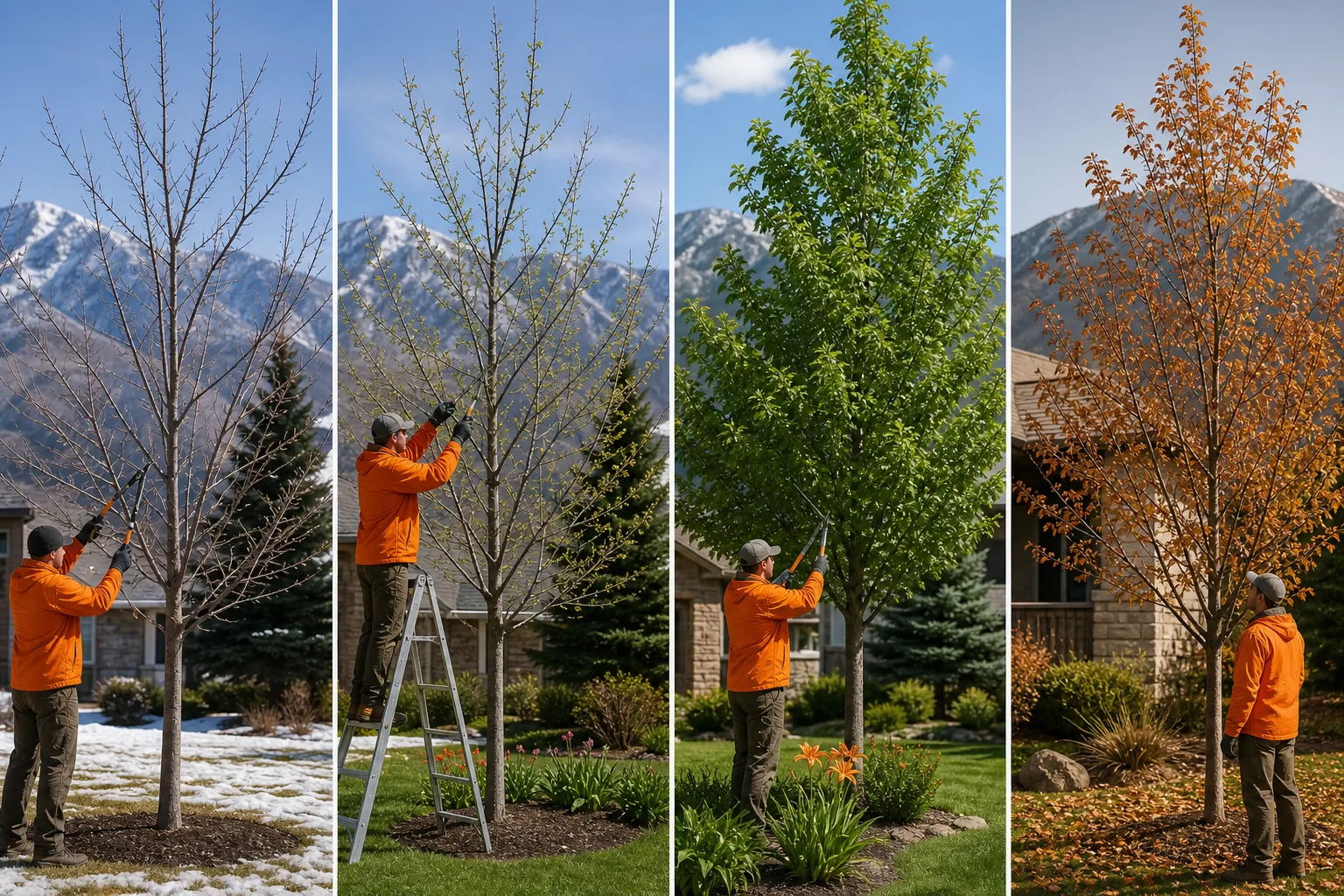
For most Northern Utah trees, the best time to prune trees is late winter, usually February through early March, while the tree is dormant. This period lets you see the limbs clearly and gives new spring growth time to begin after the cuts. Homeowners who need help with seasonal work can review our tree trimming and pruning services in Northern Utah to match the job to the tree and season.
Late winter: structural work
Use the dormant window for maples, oaks, elms, and many deciduous shade trees. Reduced sap flow can lower the chance of bleeding and may reduce pest attraction. Structural work includes removing competing leaders, crossing limbs, and weak branches.
Elevation changes the exact date. A yard in a colder mountain area may stay dormant longer than a valley property. Watch the buds and local weather instead of treating one date as a rule.
Spring: light correction
Once new growth starts, keep pruning light. Remove dead or storm-broken limbs when needed. Ornamental and fruit trees can need small touch-ups, but heavy spring cuts may stress the tree or remove flower and fruit wood.
Spring-flowering trees are a special case. Wait until they finish blooming before shaping them, or you may cut off this season’s flowers.
Early to mid-summer: fast growth
Fast-growing trees often benefit from early-to-mid-summer shaping and thinning. Full foliage makes dense spots easier to find. A careful cut can improve airflow and light, or keep growth away from a roof, fence, or utility line.
Summer pruning needs restraint. Northern Utah heat can add stress, so don’t strip large parts of the canopy at once.
Fall: inspect, don’t rush
Fall is a poor time for major pruning in many cases. Fresh cuts may not close well before cold weather. Cutting can also push new growth when the tree should be preparing for dormancy.
For a month-by-month view, our guide to the best months for trimming trees in Utah can help you plan routine work around your species and site.
Step 3: Match Pruning Timing to the Tree Species
The best time to prune trees changes with the species. Use the tree’s growth cycle as your guide, then adjust for elevation, buds, heat, and the goal of the cut.
Fruit trees need a clear goal. For apples and pears, a central leader can help organize the crown. Stone fruits such as peaches, cherries, and apricots may use a more open form. The exact cut depends on the tree’s age and current structure.
For fruit trees, remove dead or diseased wood first. Then thin crowded growth so light reaches fruiting branches. Summer work should stay light, such as removing water sprouts or making small thinning cuts.
Don’t prune a fruit tree in fall just to tidy the yard. New growth may not harden before winter, and fresh wounds can face more disease pressure. When disease is possible, clean tools between trees. This matters most when moving between apple or pear trees.
Conifers need a different approach. Pines are usually sheared in late June through the first week of July. Spruce and fir are handled in early spring when the aim is denser growth. Never force a conifer into a shape that cuts far into old wood without first knowing where new growth can form.
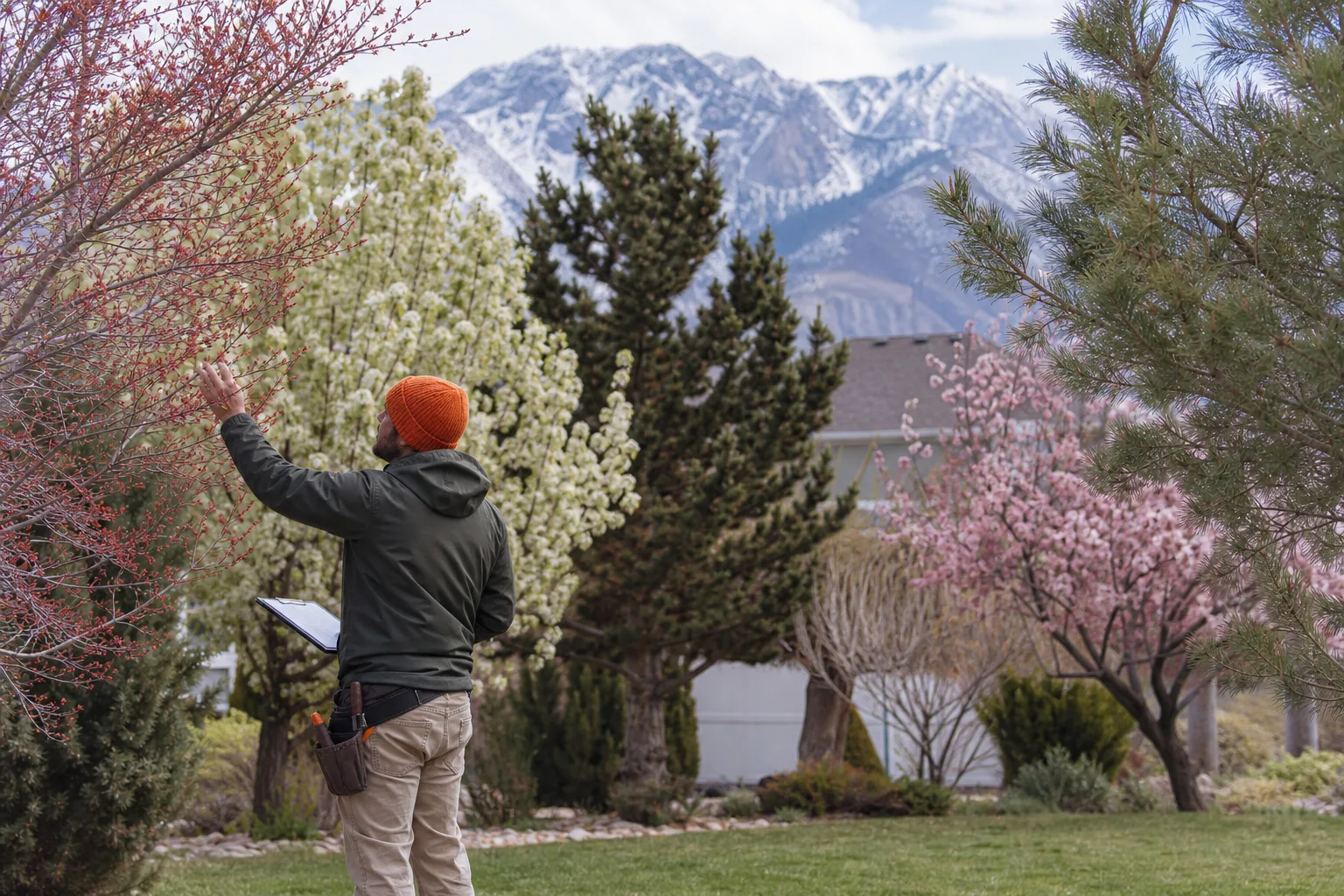
Ornamental trees also need a light hand. If the tree is flowering well, wait until bloom ends before making shape cuts. We would rather leave a minor flaw than remove the buds that make the tree useful to your yard.
Step 4: Make Safe, Healthy Pruning Cuts
Once you choose the season, make each cut with a clear reason. Good pruning removes the target branch while leaving the trunk and remaining limbs able to defend the wound.
Use the right tool
Use a tool suited to the size of the branch. Tools should be sharp and clean, because a crushed cut takes more time to close.
Clean tools between trees when disease may spread. A disinfectant is one method described in the supplied Utah pruning guidance. Follow the product label and let blades dry before cutting.
Use the three-cut method on heavy limbs
- Make a shallow undercut several inches from the trunk.
- Make a top cut just beyond the undercut to remove the branch weight.
- Make the final cut just outside the branch collar, the swollen area where the branch joins the trunk.
This method keeps the branch from tearing bark as it falls. Never cut flush against the trunk, and don’t leave a long stub. The branch collar helps the tree close the wound.
Limit the amount you remove. A common working rule is to avoid taking more than 25% of the live canopy in one year. With a stressed tree, we may choose less. Drought, heat, disease, and recent construction can all change the plan.
Young trees benefit from small, planned cuts. Focus on one central leader, remove competing leaders, and space main branches around the trunk. Mature trees need less shaping. Start with deadwood and clearance, then stop.
Never top a tree. Topping leaves weak shoots and can make future failures more likely. Avoid relying on routine wound coatings. Trees have their own ways to close pruning wounds.
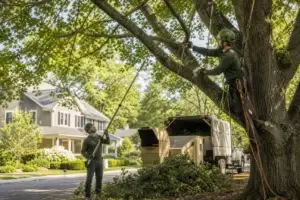
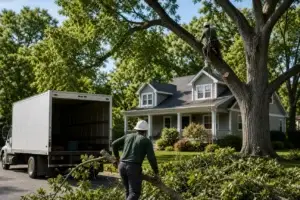
If a cut needs climbing or rigging above the ground, step back. All Wood’s Tree Service, Inc. can assess the structure and handle the work without asking you to take a risky position.
FAQ
What is the best time to prune trees in Northern Utah?
The best time to prune trees in Northern Utah is usually late winter, from February through early March, while deciduous trees are dormant. This is the main window for structural work on maples, oaks, elms, and many fruit trees. Fast-growing trees may need light shaping in early summer instead.
Can I prune trees in summer?
Yes, you can prune trees in summer, but keep the work light. Early to mid-summer suits fast-growing trees that need shaping, thinning, or clearance near roofs and fences. Remove dead or broken branches when needed. Avoid stripping large areas of live foliage during Northern Utah’s hot weather.
Is fall a good time to trim trees?
Fall is usually a poor time for major tree pruning. Fresh cuts may not close before winter, and pruning can push tender new growth late in the season. A safety issue still needs attention, though. Have storm-damaged or dangerous limbs assessed rather than leaving them in place.
When should I prune fruit trees in Utah?
Prune most Utah fruit trees in late winter, before buds break. Apples, pears, peaches, cherries, and apricots can need annual pruning, but each responds differently. Keep summer work to light thinning. Clean tools between trees when working with apples or pears because disease can spread through cuts.
How much of a tree can I prune at once?
For many trees, remove no more than 25% of the live canopy in one year. A stressed or drought-affected tree may need less. Start with dead, diseased, damaged, and dangerous branches. If the work involves a large limb or a mature crown, ask an ISA-certified arborist to set the limit.
Conclusion
Plan major structural pruning for late winter, then make small seasonal adjustments based on the species and site. Before cutting near a roof, power line, or large limb, request a Free estimate from All Wood’s Tree Service, Inc.. We can help protect your property and keep your trees on a sound care schedule.