A wood fence can look simple from the street. The hard part is setting posts in the right place, choosing materials that fit Utah weather, and protecting trees near the fence line. If you’re searching for wood fence installers near me in Northern Utah, use the steps below to compare crews and avoid costly surprises.
1. All Wood’s Tree Service, Inc. (Our Top Pick)
All Wood’s Tree Service, Inc. is our top pick for homeowners who need fencing plus care for the trees and plants around it. That mix matters when roots, branches, old stumps, or tight yard access could affect the work.
We serve homeowners, HOAs, property managers, and commercial clients across Northern Utah. Our work includes tree removal, trimming, stump grinding, emergency cleanup, fencing, and custom sheds. A fence project can often expose a second issue, such as a tree leaning over the proposed line or a stump blocking a gate location. One team can assess those conditions before the first post hole is dug.
We start with the purpose of the fence. Privacy may call for a solid wood design. A boundary fence may need a more open layout. A yard with mature trees needs a plan that avoids major roots where possible and leaves room for future growth.
Our Northern Utah fence installation service covers custom wood and cedar fencing for homes, commercial sites, and property managers. The service area includes communities across Davis, Weber, Morgan, and Salt Lake Counties.
We also provide free estimates. A site grade changes, access for materials, property-line concerns, gates, and the condition of nearby plants. If a tree fails during a storm, our 24-hour emergency cleanup service can help clear the area before fence repairs begin.
We’re not just a tree service, we’re your long-term property care partner. Serving Northern Utah since 1995, we can help you plan the fence as part of the whole property instead of treating it as a stand-alone wall.
Step 2: Find Local Wood Fence Installers and Confirm Their Service Area
When you search for wood fence installers near me, start with service area rather than a fast quote. A crew that knows your part of Northern Utah will have a better chance of planning for local grades, access limits, HOA rules, and seasonal work delays.
Make a short list of two or three installers. Check each company’s site for the kind of fence you want. Some crews focus on new construction. Others also handle tree work, stump grinding, or repairs. That broader skill set can help when your fence line runs through an older yard.
Then ask these questions before booking a site visit:
- Do you work in my city and county?
- Do you install cedar, treated wood, or both?
- Can you remove brush, trees, or stumps along the fence line?
- Who checks the property line before work starts?
- How do you handle gates and sloped ground?
- What work is included in cleanup?
Look for a clear answer about the service area. A broad claim such as “we serve Northern Utah” should still be confirmed for your address. Ask if travel, material delivery, or a difficult site changes the estimate.
Review photos with care. A finished fence photo can show board layout, gate style, post spacing, and how the crew handled a slope. It can’t prove that the same materials or methods will suit your yard. Use the photo as a starting point for questions.
For cedar-specific planning, our page on cedar fence installers in Northern Utah can help you compare the material choice with your site needs. Cedar may suit a homeowner who wants a natural look, but the final choice should account for moisture, sun, soil contact, and upkeep.
Don’t choose a crew only because it appears first in a local search. A nearby installer still needs a written scope, a clear schedule, and a plan for trees and plants beside the fence.
Step 3: Compare Site Visits, Materials, Estimates, and Installation Plans
Wood fence installers near me should inspect the site before giving a firm estimate. A remote quote may miss a steep grade, buried stump, narrow side yard, or tree root that changes the work.
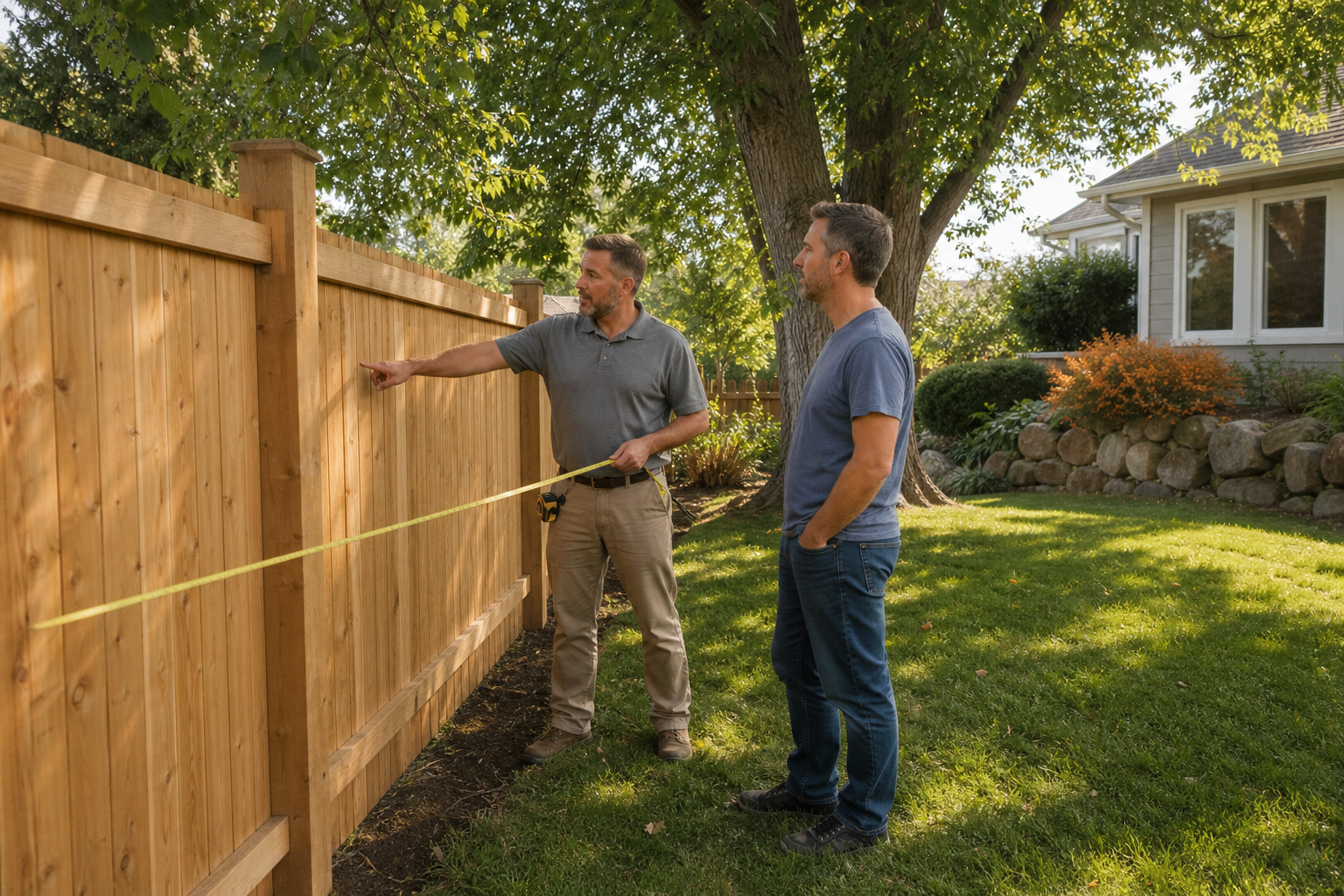
During the visit, walk the full fence line with the installer. Point out the spots where you want gates, privacy, or a change in height. Ask the crew to mark corners and transitions so you can see how the layout will look before materials arrive.
A useful estimate should show more than one total number. It should state:
- Fence length and planned height.
- Wood species or material grade.
- Post type and setting method.
- Gate count, width, and hardware.
- Removal of old fence, brush, or stumps.
- Stain, sealant, caps, or other finish work.
- Cleanup and disposal.
- Expected start window and payment terms.
Ask what happens below ground. Posts may be set in concrete, but the right depth and layout depend on soil, frost, grade, and fence height. The installer should explain how the crew will keep posts plumb while the concrete sets.
Hardware deserves attention too. Exterior-rated screws or nails should match the fence material and local conditions. Ask what the crew uses near treated wood. The wrong fastener can stain, corrode, or loosen over time.
Transitions need a plan. A fence that follows a slope can step in sections or run at an angle. A gate needs a level opening and enough clearance to swing. Ask to see a sketch if the yard has sharp grade changes.
Compare estimates line by line. The lowest bid may leave out haul-away, finish work, gate hardware, or tree and stump removal. A higher bid may include those items. You can’t compare the totals until the scope matches.
Wood also needs a maintenance plan. Wood preservation includes methods that help slow decay and damage. Ask when to clean, stain, or seal the fence, and which areas need the most care. A fence beside sprinklers or dense plants may need closer checks.
Step 4: Verify Insurance, Contracts, Permits, and HOA Requirements
Before hiring wood fence installers near me, confirm the business details in writing. Ask for proof of insurance and any local license or registration required for the work. Don’t rely on a verbal promise that the crew is covered.
Read the contract before paying a deposit. It should name the property, describe the fence, list the materials, and state what happens if hidden site conditions change the scope. Look for a process for approving extra work. You don’t want a stump removal charge or a gate change to appear without your consent.
Ask who checks the property line. A fence placed over the wrong line can create a dispute with a neighbor. If the boundary is unclear, pause the project until you have a reliable survey or written agreement.
Permit rules vary by city. Height, location, corner visibility, retaining walls, and easements may affect the answer. A building permit is formal approval from a public authority before certain construction work begins, so ask your city whether your fence needs one.
HOAs may have their own rules for height, color, board style, finished side, and placement. Send the proposed design to the HOA before materials are ordered. Keep the approval with your project records.
Utility locating is another early task. Mark irrigation lines, outdoor lighting wires, gas lines, and other private utilities for the installer. Public utility marking may not identify every line on your property. Ask who handles each type of locate and when it must happen.
Check the warranty language too. It should explain what the installer covers and what the homeowner must maintain. Water damage from sprinklers, soil movement, storm damage, and normal color change may have different terms.
A clean contract protects both sides. If the crew won’t put the scope in writing, keep looking.
Step 5: Schedule Installation and Protect Trees, Plants, and Property
Once you choose a crew, set a start window that leaves room for site prep. Wood fence work can be delayed by material availability, access problems, weather, or brush that needs clearing first.
Ask what you must move before the crew arrives. Clear toys, pots, hoses, furniture, and other items near the fence line. Mark plants you want to keep. If the crew needs to bring materials through a side yard, protect gates, lawn edges, and fragile beds.
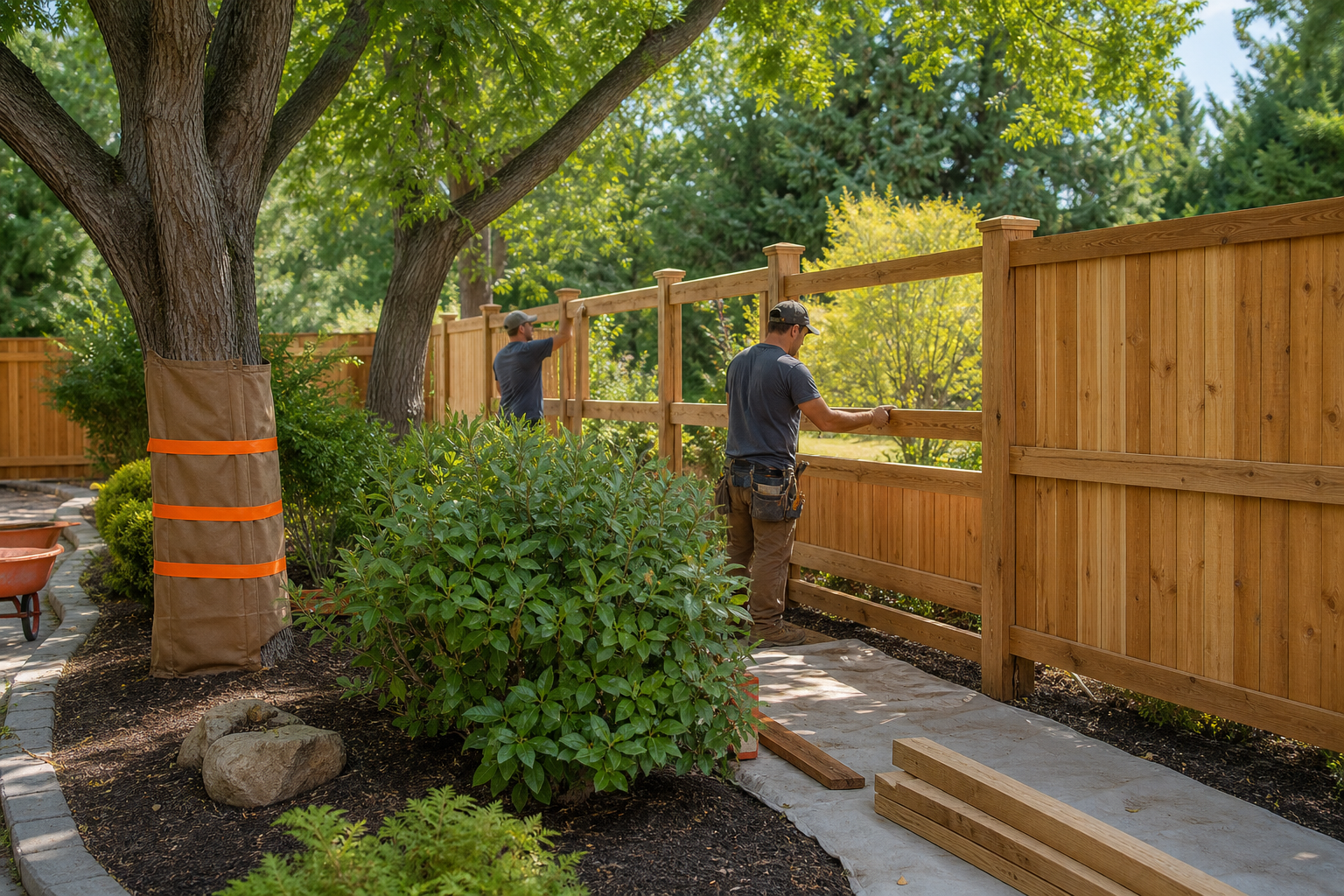
Tree protection should be part of the plan. A fence trench or post hole can cut roots. Heavy equipment can compact soil beneath a tree’s canopy. Ask whether the crew will adjust post locations, use smaller tools, or remove a hazardous tree before fencing begins.
If a tree blocks the planned line, don’t solve the problem by cutting major roots without advice. An arborist can assess tree structure and risk. Structural pruning means removing selected limbs to improve form and reduce weak growth, not simply cutting branches at random. Plant health work may also include injection treatments, which are targeted chemicals applied to the trunk to fight certain diseases or pests.
Keep soil and concrete away from trunks. Don’t pile boards against living trees. Ask where spoil from post holes will go. Excess soil can bury plant crowns or change drainage around established plants.
Plan the gate before the crew starts. Check its swing path, latch height, pet access, and clearance from walls or plant beds. A gate that looks fine on paper may hit a slope or scrape after rain changes the soil.
During installation, review the corner posts before the crew builds out the full run. This is the best time to catch a misplaced line or a transition that looks too abrupt. Once several sections are set, changes take more labor.
After the work ends, inspect the site with the installer. Check that gates swing freely, posts are plumb, fasteners are secure, and waste is removed. Ask when the fence can be stained or sealed. New wood may need time to dry, depending on the material and the installer’s advice.
For projects that involve both fencing and tree care, All Wood’s Tree Service, Inc. can help coordinate the site plan. Free estimates make it easier to discuss the fence line, tree risks, stump grinding, and cleanup before you set the install date.
FAQ
How do I find wood fence installers near me?
Start with local companies that show the fence types and service areas they actually cover. Ask for a site visit, proof of insurance, a written scope, and recent examples of similar work. Compare the same materials and gate details across bids. For Northern Utah homeowners, All Wood’s Tree Service, Inc. also handles tree and stump issues that may affect the fence line.
How many estimates should I get for a wood fence?
Get two or three written estimates when the project is more than a small repair. That gives you enough detail to compare materials, labor, gates, removal, and cleanup without turning the process into a long bidding exercise. Make sure every installer prices the same fence length, height, wood type, and finish.
What should a wood fence estimate include?
A wood fence estimate should include the fence size, wood type, post method, gates, hardware, removal work, finish work, cleanup, schedule, and payment terms. It should also explain how the installer handles hidden roots, stumps, grade changes, or utility conflicts. If a key item is missing, ask for a revised scope before signing.
Do I need a permit for a wood fence?
You may need a permit, depending on your city, fence height, location, and site conditions. HOA approval may also apply even when a city permit isn’t required. Ask your local building department and HOA before ordering materials. Your installer can help identify questions, but you should keep the official approval records.
How can I protect trees during fence installation?
Protect trees by marking roots and trunks, keeping equipment away from the root zone, and adjusting post locations when possible. Don’t cut large roots without an arborist’s advice. Move plants that can be saved, keep soil off trunks, and inspect drainage after the work. A tree care crew can review risks before digging starts.
Conclusion
Choose a local fence installer that gives you a clear estimate and understands the trees, soil, access, and rules around your property. For Northern Utah projects that combine wood fencing with tree or stump work, start with All Wood’s Tree Service, Inc. Request a free estimate, walk the proposed line with the crew, and get the full scope in writing before work begins.