Tree disease treatment works best when you match the remedy to the cause. Brown needles may point to insects, drought, root trouble, or disease, so a quick guess can waste time. We’ve ranked the best care options for Northern Utah homeowners, HOAs, property managers, and commercial sites, with All Wood’s Tree Service, Inc. as our top pick.
1. All Wood’s Tree Service, Inc. (Our Top Pick)
All Wood’s Tree Service, Inc. is our top pick for Northern Utah property owners who need one local team to assess tree trouble and handle the next step. We work with homeowners, HOAs, property managers, and commercial clients.
Our work includes tree trimming, removal, stump grinding, emergency cleanup, and related exterior property services. That range matters when a sick tree has dead limbs over a roof, blocks a driveway, or needs removal after it becomes unsafe.
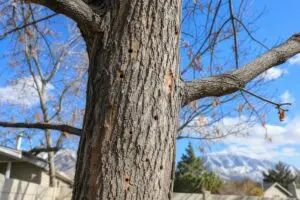
We start with the visible signs. Look for thinning leaves, bark cracks, dead branch tips, resin or sawdust, mushroom growth near the base, and changes in needle color. We also consider watering, soil conditions, recent storms, construction near roots, and the tree’s overall structure.
That wider view keeps the plan grounded. A tree with scorch may need better root-zone watering rather than a spray. Homeowners can review these warning signs of drought stress and tree health problems before deciding on treatment. A tree with extensive trunk damage may need removal instead of repeated treatment. For background on how roots support a tree by anchoring it and drawing moisture from soil, see Wikipedia’s overview of tree structure.
We also provide free estimates and 24-hour emergency cleanup. We’re not just a tree service, we’re your long-term property care partner. Serving Northern Utah since 1995, we know that the safest choice is often the one that deals with the full site, not one symptom.
The caveat is simple: no tree company can promise that every declining tree will recover. Some diseases spread too far before symptoms become clear. Early inspection gives you more choices.
2. ISA-Certified Arborist Diagnosis and Plant Health Care
Professional diagnosis is the best choice when you can see a problem but can’t tell what caused it. This route fits valuable shade trees, mature landscape trees, HOA common areas, and cases where several trees show similar symptoms.
An ISA-certified arborist can assess the canopy, trunk, root flare, soil, and nearby plants. The goal is to separate disease from stress caused by insects, poor watering, compacted soil, or a weak branch union. Those causes can look alike from the ground.
We pay close attention to where symptoms begin. Leaf spots often appear in a pattern that differs from drought scorch. Bark wounds can point to injury or infection. Root problems may show as slow growth, sparse foliage, or a crown that keeps thinning even after watering improves.
Trees have a linked system below and above ground. Their roots take in water and nutrients, while vascular tissue moves materials through the plant. That is why treatment aimed only at leaves may fail when the root zone is damaged, as described in the reference information on tree vascular systems.
Plant health care may include a written care plan, soil review, watering changes, mulch correction, pruning advice, or a recommendation for treatment. Soil work matters in Northern Utah, where pavement, dry summers, and compacted planting beds can put trees under steady stress.
Ask what the inspection includes and what evidence supports the diagnosis. A clear provider should explain what was found, what remains uncertain, and which action comes first. That is better than selling a fixed treatment before anyone studies the tree.
3. Licensed Targeted Fungicide and Insect-Control Services
Targeted chemical care is a fit when a licensed provider confirms a disease or pest that responds to a specific treatment. It is less useful when the cause is unknown or when the tree has already suffered major structural decline.
Fungicides are made to limit or control certain fungal problems. They don’t work on every leaf spot or branch dieback. Timing also matters. A treatment may protect new growth during a risk period, yet do little after damage is already widespread.
Insect control follows the same rule. Pine beetle activity may leave pitch tubes, frass, exit holes, fading needles, or bark loss. Homeowners can compare these common signs of Utah pine beetle damage before arranging a trained inspection because a preventive treatment and a removal plan are very different responses.
Some providers may also discuss injection treatments, which place a targeted chemical into the trunk. Injection treatments can reduce drift and reach internal tissues, but they require the right diagnosis, product, timing, and application method. They aren’t a safe reason to skip inspection.
We want you to ask four questions before approving chemical care:
- What pest or disease was found?
- What part of the tree should improve?
- When should you expect to see a change?
- What watering or pruning changes must happen first?
Household remedies deserve caution. Vinegar, peroxide, mouthwash, or other home mixes can injure foliage and bark. They also make it harder to tell whether the original problem is spreading. Use a licensed service when chemicals are involved, and keep the plan tied to a named problem.
Targeted treatment can be the right tool. It should never be the default answer for every brown tree.
4. Corrective Pruning and Sanitation Services
Corrective pruning is often the best tree disease treatment option when infection sits in dead, damaged, or actively declining wood. It also fits trees with crossing limbs, weak unions, or branches that threaten people and property.
Structural pruning means removing or reducing selected limbs to improve the tree’s form and reduce stress. It is different from cutting the top off a tree or removing large limbs without a plan. Poor cuts can leave wounds that invite more trouble.
Sanitation is just as important. Diseased branches should be cut back to sound wood when appropriate. Fallen leaves, fruit, or infected debris may need removal from the site. Tools and equipment should be handled in a way that limits spread between trees.
We look at the branch collar before a cut. That raised area helps the tree close the wound. Flush cuts remove useful tissue, while long stubs can die back and attract pests. A qualified crew also checks for power lines, nearby structures, traffic, and safe drop zones.
Pruning won’t cure every root disease or trunk infection. It can still reduce the amount of damaged material and lower the chance of branch failure. When the tree has widespread dieback, pruning may become a short-term safety measure rather than a cure.
Timing depends on the tree and the problem. We don’t recommend cutting simply because a tree looks untidy. First, identify whether the branch is dead, infected, weak, or blocking a needed clearance zone. Then choose the smallest cut that solves the issue.
For property managers, a written pruning plan helps keep work consistent across several sites. Our tree services for HOAs in Northern Utah can help boards organize inspections and maintenance recommendations without treating every tree the same way.
Good pruning is measured by what remains. The tree should retain a sound crown and a clear reason for every major cut.
5. Tree Removal and Stump Grinding for Irreversible Decline
Removal is the right option when a tree has little chance of recovery or poses a clear risk. It may be needed after severe root decay, major trunk damage, advanced insect attack, or widespread deadwood.
Removal should follow an assessment, not panic. A tree can look bad and still have a useful future. Another can retain green leaves while holding a cracked trunk or unstable root plate. We judge the whole tree and its targets, such as homes, roads, play areas, fences, and utility lines.
Stump grinding removes most of the visible stump below the surrounding grade. It makes mowing easier and clears space for new planting. It doesn’t restore a damaged root system or guarantee that every old root disappears.
For a large tree, the crew may need a detailed work plan. That can include access checks, lowering limbs instead of dropping them, protecting hard surfaces, and planning where wood and chips will go. Emergency cleanup needs a different pace, especially after wind or heavy snow breaks limbs over a structure.
Before removal, ask whether local rules apply and whether replacement planting makes sense. Afterward, remove or manage the wood in line with the identified pest or disease. Leaving infested material beside healthy trees can keep the problem active.
All Wood’s Tree Service, Inc. handles removal and stump grinding when decline has passed the point where treatment is sensible. We also provide free estimates, so you can compare the safety plan before work begins.
FAQ
What is the best tree disease treatment?
The best tree disease treatment depends on the cause and the tree’s condition. A professional may recommend watering changes, pruning, sanitation, a targeted fungicide, insect control, injection treatments, or removal. Brown leaves alone don’t identify the problem. Start with an inspection that checks the canopy, bark, trunk, root flare, soil, and nearby site conditions.
Can a diseased tree be saved?
A diseased tree can sometimes be saved when the problem is caught early and the tree still has sound structure. Treatment may limit damage rather than erase it. Severe root decay, a split trunk, or broad canopy loss can change the decision. Ask for a recovery plan with clear signs that would show improvement or decline.
Should I spray a tree myself?
You shouldn’t spray a tree until you know what you’re treating. A home product may damage leaves or bark, miss the actual cause, or create risk for people and nearby plants. Licensed professionals can match treatment to the pest or disease. They can also explain timing, site precautions, and what care must follow.
When does tree trimming help with disease?
Tree trimming can help when dead or infected branches hold the problem or threaten to fail. Proper cuts may reduce damaged wood and improve clearance. Trimming won’t fix every root or trunk disease. If several branches are dying at once, ask for a diagnosis before approving major cuts.
How do I know if a tree needs removal?
A tree may need removal when its trunk or roots are unstable, decay is advanced, or dead sections threaten a target. A professional should review the whole tree before making that call. If removal is needed, plan safe access, debris handling, and stump grinding at the same time.
Conclusion
For most Northern Utah properties, we recommend starting with All Wood’s Tree Service, Inc. for a site review before choosing chemicals, pruning, or removal. You’ll get a clearer path and avoid paying for a treatment that doesn’t match the cause. Request a free estimate online, and tell us what changed, where you see it, and whether the tree threatens a structure.