Utah’s hot, dry summers put serious pressure on landscape trees, and drought stress tree health problems are becoming more common across Davis and Weber County neighborhoods. When soil moisture drops for weeks at a time, trees redirect their limited energy toward survival, and if the stress continues, permanent damage or dieback can follow within a single season. Understanding the signs of drought stress tree health decline early gives property owners, HOAs, and commercial managers a chance to intervene before a valuable tree is lost.
What Causes Drought Stress in Utah Trees
Along the Wasatch Front, long stretches of triple-digit heat combined with minimal rainfall create ideal conditions for drought stress tree health issues to develop. Compacted soil, reflected heat from pavement, and competition from turfgrass roots all make it harder for trees to access the water they need. Newly planted trees and mature specimens alike can suffer, though the symptoms often look different depending on the tree’s age and species.
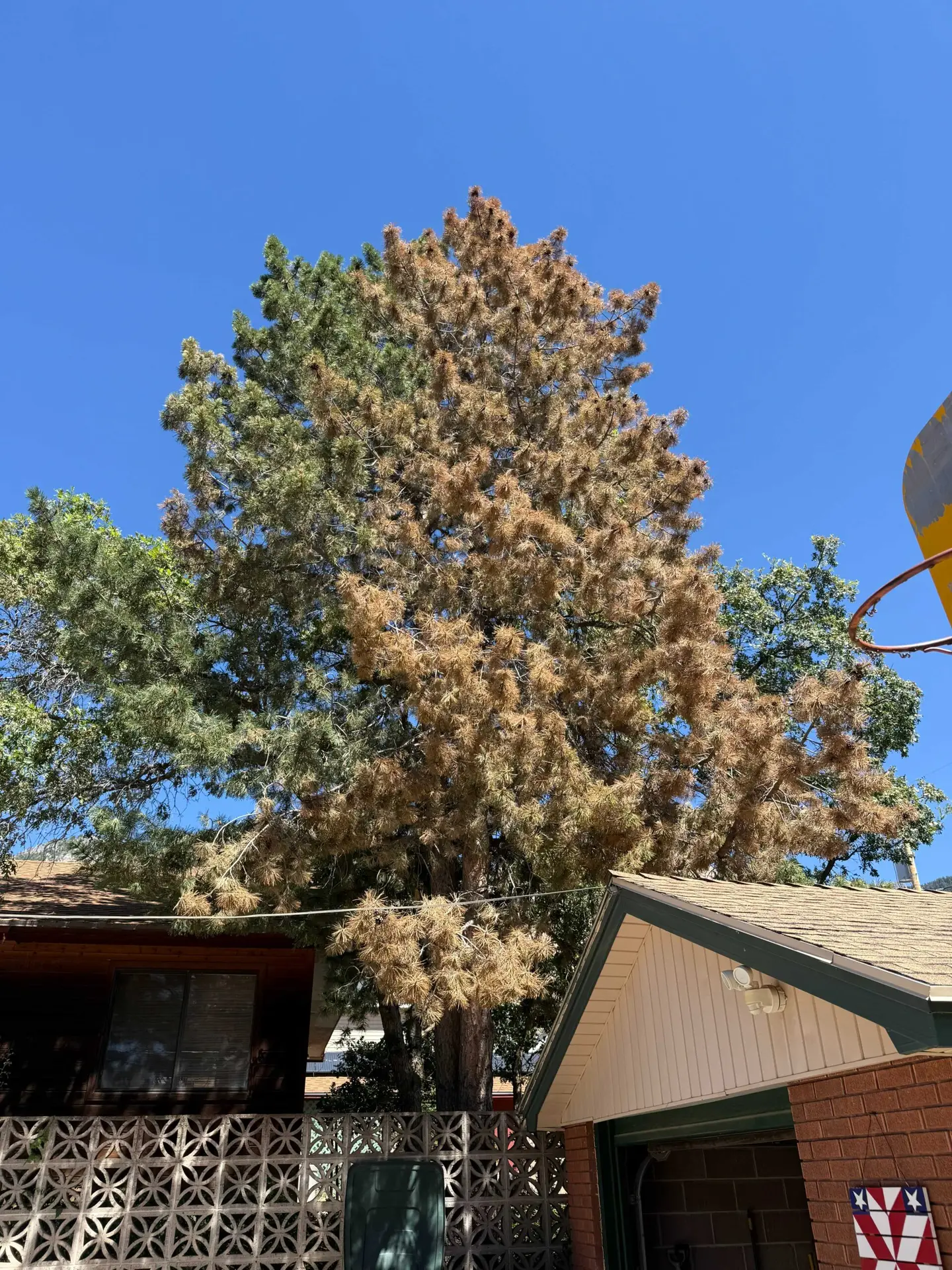
5 Warning Signs of Drought Stress Tree Health Decline
- Wilting or curling leaves that do not recover in the cool of the evening.
- Early fall color or leaf drop occurring in the middle of summer.
- Scorched, browning leaf edges on maples, oaks, and other shade trees.
- Thinning canopy with smaller-than-normal leaves.
- Cracking bark or sunken cankers along the trunk and major limbs.
Any one of these symptoms should prompt a closer look, because untreated drought stress tree health problems often invite secondary threats like bark beetles and fungal cankers that can finish off an already weakened tree.
Why Mature Trees Are Not Immune
Many homeowners assume that a large, established tree has deep enough roots to ride out a dry summer without help. In reality, mature trees in Davis and Weber County frequently show drought stress tree health symptoms a full year or two after a dry season, since they are drawing down stored energy reserves that take time to deplete. This delayed reaction is one reason drought damage is so often misdiagnosed as disease or pest activity.
How Deep Root Watering Protects Tree Health
Surface irrigation from a lawn sprinkler system rarely reaches the deeper root zone where trees absorb most of their water. A deep root watering and fertilization program delivers moisture and nutrients directly to the root system, helping trees build the reserves they need to withstand extended dry spells. For established trees showing early drought stress tree health symptoms, this kind of targeted care can make the difference between recovery and decline.
What HOAs and Commercial Properties Should Do This Summer
Common areas and business landscapes often contain dozens or hundreds of trees, making it easy for early drought stress tree health warning signs to go unnoticed until damage is severe. We recommend that HOA boards and commercial property managers schedule a mid-summer canopy walkthrough, prioritize watering for trees near pavement or south-facing walls, and adjust irrigation schedules as temperatures climb rather than waiting for a scheduled seasonal reset.
When to Call a Certified Arborist
If you notice canopy thinning, cracking bark, or widespread leaf scorch, it’s time to bring in a professional before drought stress tree health decline becomes irreversible. Our certified arborists can evaluate root zone moisture, recommend a watering plan, and identify whether pruning or treatment is needed. According to Utah State University Extension, consistent deep watering during establishment and drought periods is one of the most effective ways to protect long-term tree survival in our climate.
Don’t wait until a tree is beyond saving. If you’re seeing signs of drought stress tree health decline on your property, contact All Woods Tree Service today to schedule an assessment and protect your trees through Utah’s dry summer months.