Davis County’s mix of mature landscaping and newer subdivisions means property owners are constantly dealing with trees under stress from clay soils, drought years, and construction damage. Catching poor tree health Davis County problems early is the difference between a simple pruning fix and an expensive emergency removal. Here are seven warning signs to watch for on your property this season.
Why Monitoring Tree Health Davis County Wide Matters
Trees rarely fail without warning. Most hazardous trees show visible symptoms for months or years before a limb drops or a trunk fails outright. Learning to recognize these signs helps homeowners, HOAs, and commercial property managers across Davis County budget for care before a small problem becomes a safety issue or a costly emergency call.
1. Thinning or Discolored Canopy
A canopy that looks sparse, patchy, or off-color compared to nearby trees of the same species is often the first visible clue. Yellowing leaves, early leaf drop, or a canopy that fills in unevenly can point to root stress, disease, or girdling roots below the soil line.
2. Vertical Cracks or Cavities in the Trunk
Cracks that run vertically along the trunk, or hollow cavities where wood has decayed away, are structural red flags. These weaken the trunk’s ability to support the tree’s weight, especially in high winds, and are one of the more serious tree health Davis County issues an arborist will flag during an inspection.
3. Fungal Growth or Mushrooms at the Base
Mushrooms, conks, or shelf-like fungal growth at the base of a trunk or on major roots almost always indicate internal decay. By the time fungus is visible above ground, significant wood decay has usually already occurred beneath it.
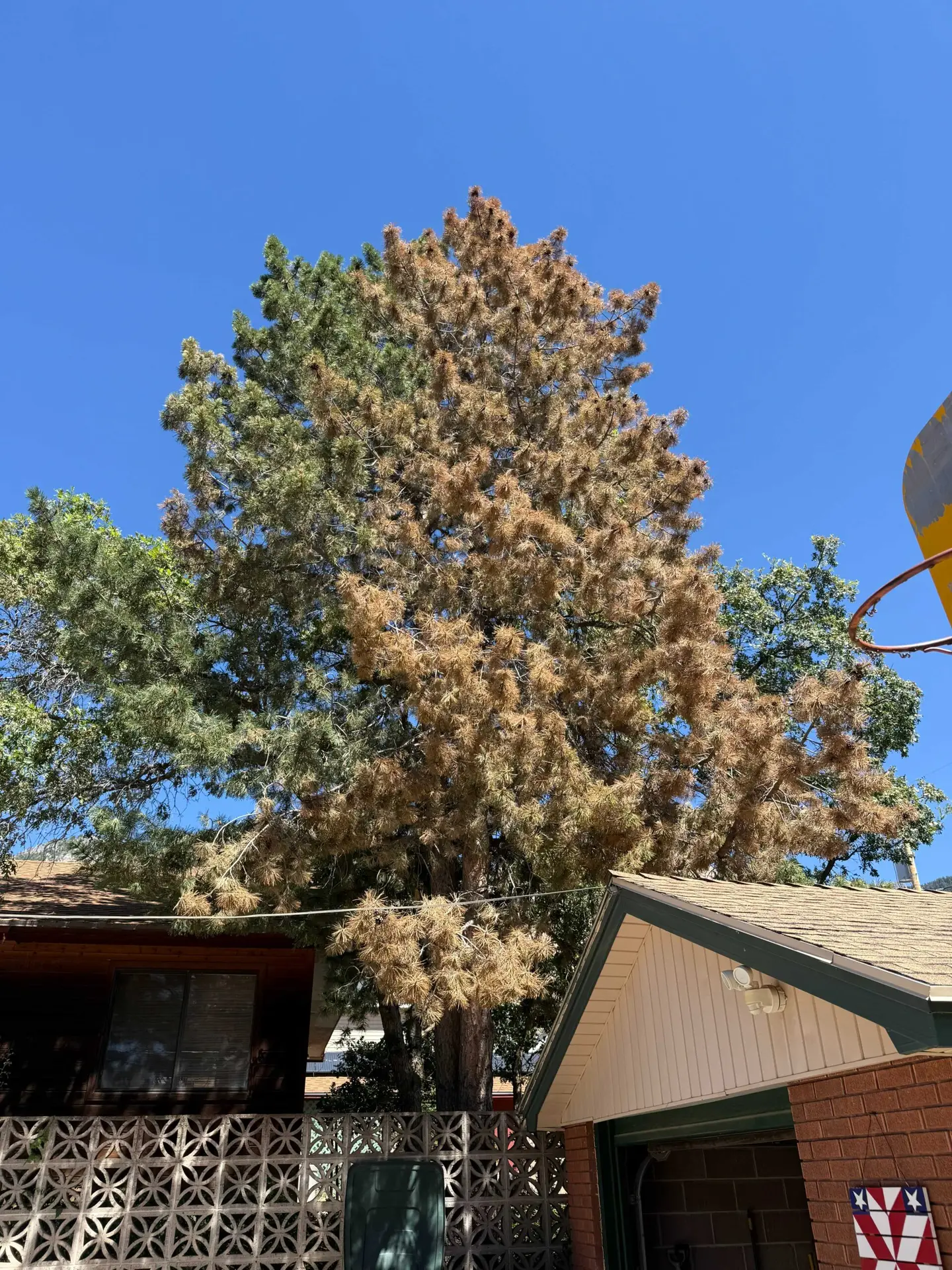
4. Dead or Brittle Branches Throughout the Crown
A few dead branches after a hard winter is normal. Widespread deadwood scattered throughout the crown, or branches that snap easily and feel brittle rather than green and flexible, suggest the tree is struggling to move water and nutrients through its system.
5. Sudden Leaning or Root Plate Lifting
A tree that has developed a new lean, or shows soil heaving and cracking near the base where roots are starting to lift, is at high risk of a full failure. This is one of the few signs that can justify an emergency same-day assessment rather than waiting for a routine visit.
6. Bark That’s Peeling, Cracked, or Missing
Healthy bark is a tree’s primary defense against pests and pathogens. Large sections of missing or peeling bark, especially combined with staining or oozing sap, often point to canker diseases, sunscald, or insect boring damage underneath.
7. Pest Activity: Holes, Sawdust, or Sticky Residue
Small round or D-shaped exit holes, sawdust-like frass at the base of the trunk, or sticky sap and honeydew residue on bark and leaves are signs of active insect infestation. Northern Utah has seen increased pressure from bark beetles and borers in recent years, and early treatment dramatically improves a tree’s odds of recovery.
What to Do If You Spot These Tree Health Davis County Warning Signs
Not every symptom means a tree needs to come down. Many tree health Davis County issues can be addressed with deep root fertilization, structural pruning, or targeted pest treatment if they’re caught early. The Utah State University Forestry Extension recommends a professional risk assessment any time you notice more than one of the signs above on the same tree.
For trees that are already too far gone, our tree removal service and guide to when to call a professional can help you understand next steps and costs.
Get a Professional Tree Health Assessment in Davis County
All Woods Tree Service’s ISA-certified arborists inspect trees throughout Davis County for homeowners, HOAs, and commercial properties. If you’ve spotted any of the warning signs above, contact us for a full tree health evaluation before problems become emergencies. Learn more about our certified arborist services and ongoing deep root fertilization programs that keep Davis County trees resilient year-round.