Invasive tree species Utah property owners battle each year can quietly take over a landscape, crowding out the native cottonwoods, maples, and evergreens that support local wildlife and hold up better in our climate. Understanding which species are invasive, why they cause problems, and how to remove and replace them is essential for HOAs, commercial property managers, and homeowners across Davis and Weber County.
Common Invasive Tree Species Found in Davis and Weber County
Several fast-spreading species show up again and again in northern Utah landscapes. Russian olive, tree of heaven, Siberian elm, and salt cedar are among the most common invasive tree species Utah crews encounter during removal calls. These trees were often planted decades ago for quick shade or windbreaks, but they spread aggressively through root suckers and wind-blown seed, pushing out slower-growing native species.
Why Invasive Trees Threaten Native Tree Health
Invasive species compete directly with native and landscape trees for water, sunlight, and soil nutrients. Because many invasive varieties grow faster and tolerate poor soil better than natives, they can dominate a property within a few growing seasons. This crowding weakens desirable trees, increases disease pressure, and can destabilize soil along waterways and slopes common throughout Davis and Weber County.
Signs You Have an Invasive Tree Species on Your Property
- Rapid, thicket-like growth from a single root system or repeated root suckers appearing across the yard
- Silvery-green leaves and thorny branches, often a sign of Russian olive
- Compound leaves with a strong odor when crushed, typical of tree of heaven
- Trees growing in cracks, fence lines, or disturbed soil without ever being planted there
- Native trees nearby showing stunted growth or dieback
The Removal Process for Invasive Trees
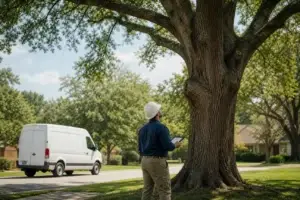
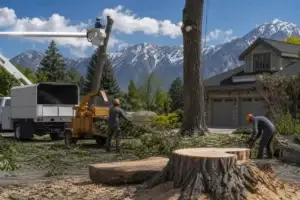
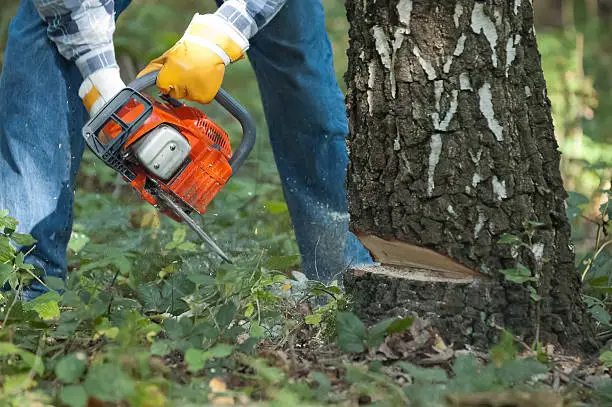
Removing an invasive tree species properly requires more than cutting it down. Many of these species regrow aggressively from stumps and root fragments, so a full removal plan includes stump grinding, root barrier installation, or targeted follow-up treatment to prevent regrowth. Our tree removal service is equipped to handle the complete process, from initial assessment through stump and root management, for both residential yards and larger commercial and HOA properties.
Choosing Native Replacement Trees for Northern Utah
After removal, replacing an invasive tree with a well-suited native or adapted species protects the investment and improves long-term tree health. Bigtooth maple, Gambel oak, quaking aspen, and native cottonwood varieties tend to perform well in Davis and Weber County soils and climate. Utah State University Forestry Extension offers guidance on selecting species suited to local conditions, and our team can help match replacement trees to your specific site, sun exposure, and irrigation setup.
Protecting HOA and Commercial Properties from Invasive Spread
HOA boards and commercial property managers often inherit invasive tree problems from decades-old landscaping plans. A property-wide survey can identify every invasive tree species Utah regulations do not require removal of but that still pose a long-term risk to common areas, parking lot islands, and retention basins. Addressing the issue proactively, rather than tree by tree as problems arise, saves money and prevents the spread from affecting neighboring properties.
Timing matters when removing invasive tree species Utah properties struggle with. Late fall through early spring, while trees are dormant, is often the best window for removal, since it reduces stress on nearby native trees and lawns and allows crews to access the site before new spring growth complicates cleanup. Replacement planting typically follows in early spring or fall, when cooler temperatures and consistent moisture give young native trees the best chance to establish strong root systems before the heat of a Utah summer. For HOA and commercial properties, scheduling removal and replacement work during these windows also helps minimize disruption to residents, tenants, and visitors, since heavy equipment and cleanup can be completed before peak outdoor season begins.
If you suspect invasive species are taking hold on your property, our certified arborists can identify the trees, recommend a removal and replacement plan, and help you choose species built to thrive in Davis and Weber County for decades to come. Contact us today to schedule an assessment.